Rental property investing works. Done right, it creates steady monthly income, long-term equity, and real tax advantages. But buying a property and hoping for profit is not a strategy. You need the right market, honest numbers, and a solid plan.
This article covers how rental income works, which property types to consider, how to finance a deal, and which mistakes cost investors the most.
What Is Rental Property Investing?
Rental property investing means purchasing real estate and charging tenants to live there. Each month, tenants pay rent. You use that money to cover the mortgage, taxes, insurance, and maintenance. What remains is your cash flow.
Here is a straightforward example. You collect $2,000 in monthly rent. Your mortgage costs $1,200. Taxes run $200. Insurance is $100. Maintenance averages $150. That leaves $350 per month, or $4,200 per year from one property.
Own three similar properties? That comes to $12,600 in annual income. Scale to ten properties and you are earning $42,000 per year, before the properties grow in value on top of that.
How Appreciation Adds to Returns
Property values increase over time. US real estate has historically grown at roughly 3-5% per year. A $300,000 property bought today could be worth $444,000 in ten years at 4% annual growth. That is $144,000 in equity, on top of every rent check you collected.
Cash Flow vs. Equity Growth
Cash flow investors want high monthly income now. They target lower-priced properties in strong rental cities. Equity growth investors accept lower monthly profit and target markets where prices will rise.
The strongest investors plan for both. Positive cash flow keeps the business running. Appreciation builds real wealth over time.
Types of Rental Properties to Consider
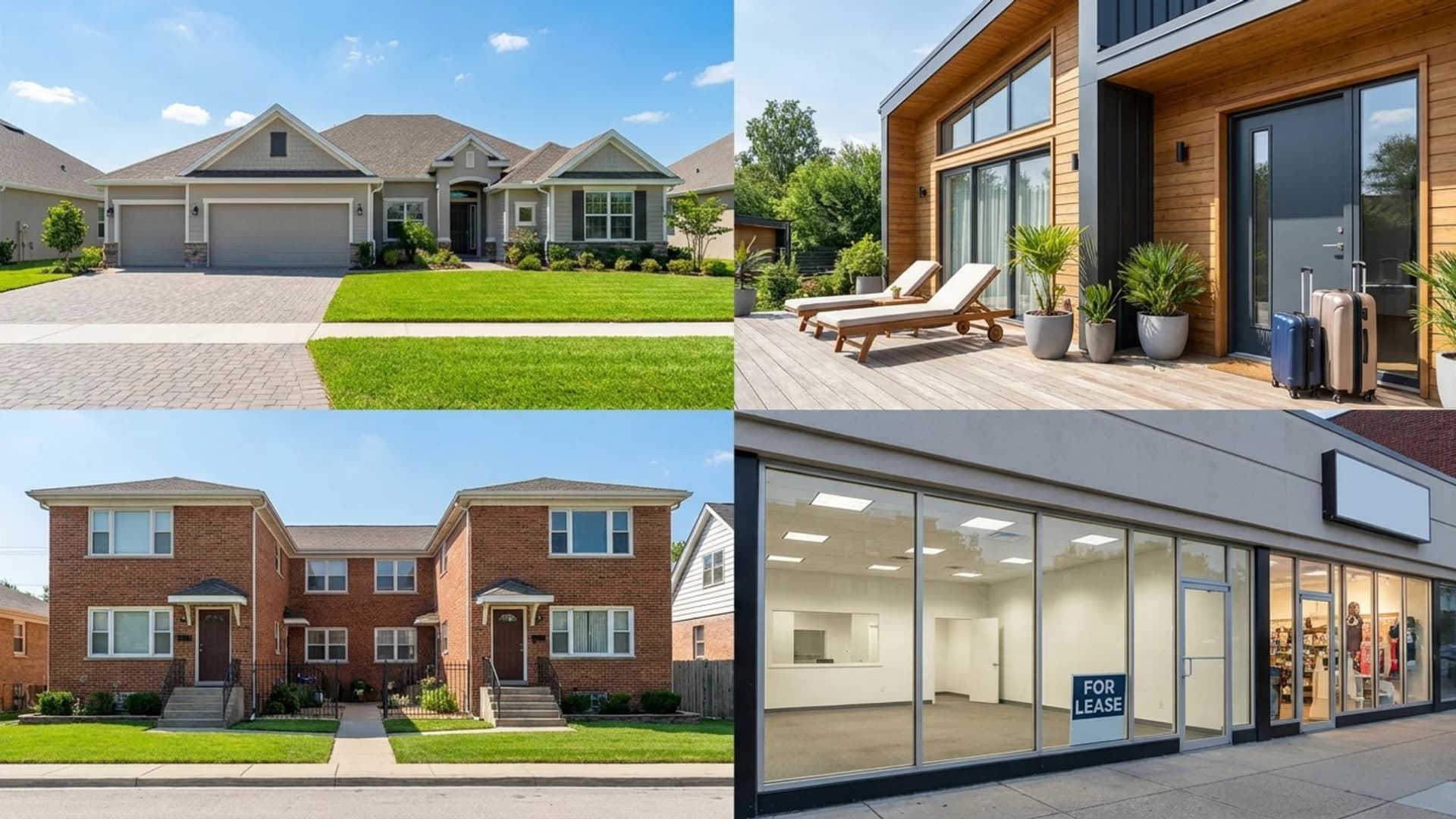
The right property type depends on your budget, risk level, and how much time you want to put in.
1. Single-Family Homes
These are the most common starting point. Families tend to stay for years, cutting turnover costs. Banks finance them easily. You manage one tenant and one lease. The downside is simple: if the tenant leaves, income drops to zero.
2. Multi-Family Properties
Duplexes, triplexes, and small apartment buildings give you multiple rent checks. Lose one tenant and the others still pay. Cash flow per dollar invested is stronger. Down payments run higher at 20-25%. Management gets more complex as units go up.
3. Short-Term Rentals
A property earning $1,500 per month on a long lease could earn $3,000 or more as a short-term rental. The income is higher, but the work is too. Guests turn over constantly. Cleaning costs are high. Many cities now restrict or ban short-term rentals. Always check local laws before buying for this purpose.
4. Commercial Properties
Office and retail spaces require more capital and experience. Tenants sign long leases of three to ten years. Start with residential properties first. Move to commercial after you understand the fundamentals.
How to Get Started with Rental Property Investing
Choosing the right strategy before buying your first property can determine whether your investment creates steady income or costly problems. Follow these steps to build a rental property plan with clear goals, realistic numbers, and manageable risks.
Define Your Goals First
“Make extra money” is not a plan. “Earn $1,000 per month in passive income within two years” is. Write down a target income, the number of properties you want, and how much time you can manage each week.
Research Your Target Market
Location drives rental success more than any other factor. Look for cities with job growth and a vacancy rate below 5%. Check the price-to-rent ratio by dividing the median home price by annual rent. A ratio below 15 suggests good rental economics. A ratio above 20 means property prices are high relative to what tenants will pay.
In 2026, cities like Raleigh, Charlotte, and Nashville continue to show strong rental demand driven by tech sector growth and remote-work migration. Midwest cities often deliver better cash flow because entry prices are lower.
Know Your Startup Costs
Down payments for investment properties run 15-25%. On a $300,000 property, that is $45,000 to $75,000. Closing costs add another 2-5%. Keep extra cash in reserve for repairs and months without tenants.
How to Finance a Rental Property
Funding a rental property requires choosing the right loan option, preparing enough capital, and understanding how financing affects your cash flow and long-term returns.
| Loan Type | Down Payment | Best For | Key Condition |
|---|---|---|---|
| Conventional | 20-25% | Standard investment properties | Credit score 620+, ideally 700+ |
| FHA | 3.5% | House hacking multi-family | Must live in one unit for 1 year |
| DSCR | 20-25% | Investors with complex income | Qualified by property income, not salary |
| VA Loan | 0% | Eligible veterans | Must meet VA occupancy requirements |
Investment property loans carry rates 0.5-1.0% higher than primary residence loans. In 2026, rates have stabilized around 6% according to current market reporting. Paying cash removes the mortgage and quickly improves cash flow. The trade-off is that cash purchases limit how many properties you can own at once.
How to Evaluate a Property Before Buying
Run the numbers before you make any offer. Three metrics matter most.
| Metric | How to Calculate | Target |
|---|---|---|
| Gross Rental Yield | Annual rent ÷ Purchase price × 100 | 8-12% in most US markets |
| Cash-on-Cash Return | Annual cash flow ÷ Total cash invested × 100 | 5-10%+ |
| Cap Rate | Net operating income ÷ Property value × 100 | Class B: 6-8%; Class C: 8-12% |
The 50% Rule
Expect non-mortgage expenses to consume roughly 50% of gross rent. Collect $2,000 per month? Budget $1,000 for taxes, insurance, maintenance, and vacancies before you count the mortgage. This is a quick check to spot deals without real cash flow potential.
Run a Worst-Case Scenario
What if the property sits empty for three months? Can you still cover the expenses? If the answer is no, the deal is too tight. Stress-testing numbers before purchase stops surprises later.
Walk the Neighborhood
Visit at different times of day. Check crime statistics. Look at school ratings. Good schools attract long-term tenants even if those tenants do not have children. See how well nearby properties are maintained.
Managing a Rental Property Successfully
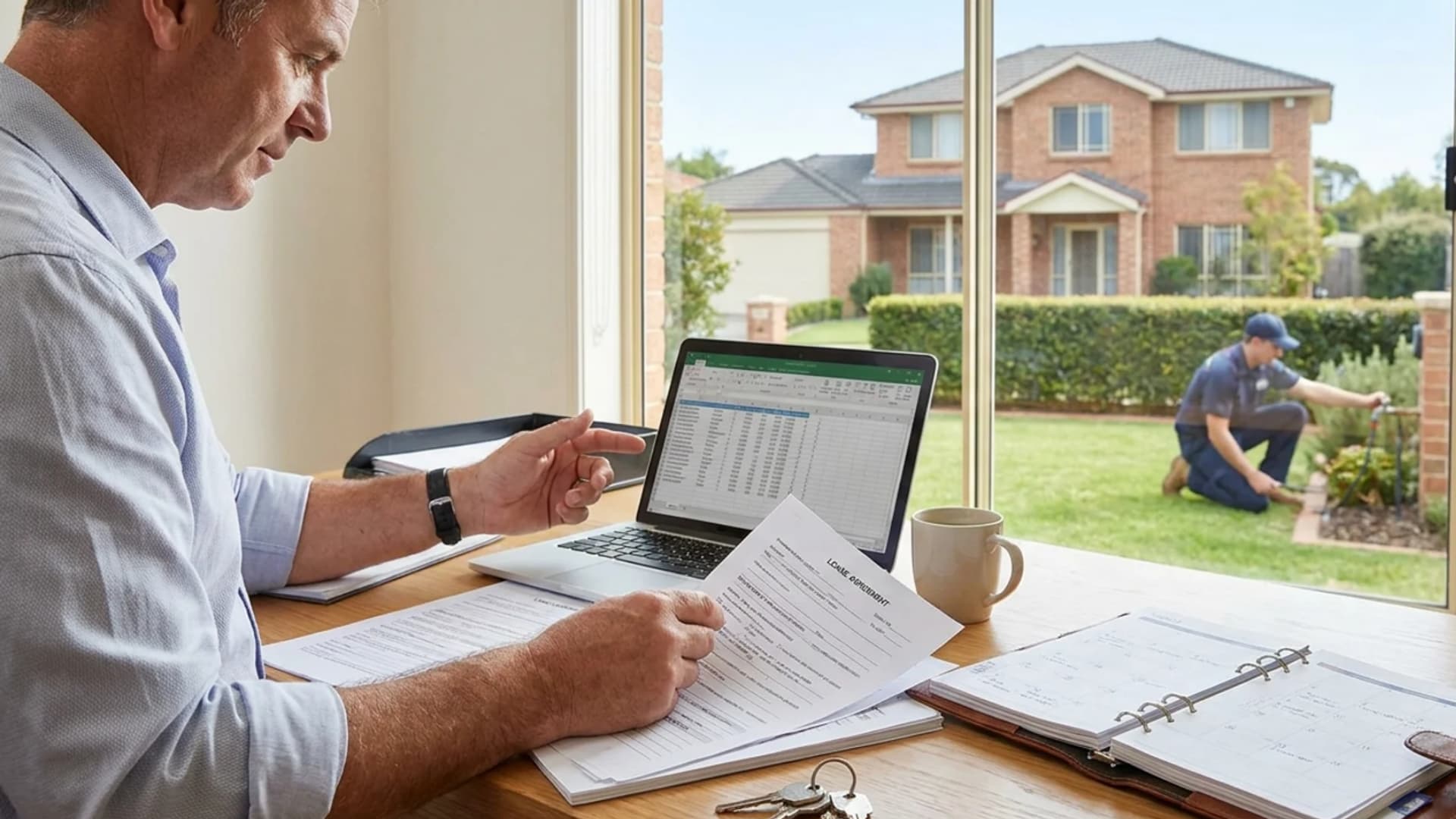
Managing a rental property successfully requires consistent maintenance, reliable tenants, clear communication, and systems that keep daily operations running smoothly.
Self-Managing vs. Hiring a Manager
Self-management saves the 8-12% monthly fee. You handle showings, tenant calls, repairs, and rent collection yourself. Professional management costs money but frees your time. Manage your first property yourself to learn how it works. Decide whether to hire help as your portfolio grows.
Screen Every Tenant
A bad tenant costs more than a vacancy. Run credit checks on all applicants and look for scores above 650. Verify income with pay stubs or tax returns. Monthly income should be at least three times the rent. Call previous landlords and ask direct questions about payment history and property care.
Write a Strong Lease
Cover rent amount, due dates, late fees, maintenance responsibilities, and pet rules. Clear written terms prevent disputes later. Use a lease reviewed by a local real estate attorney.
Budget for Maintenance
Budget 1% of property value for annual maintenance. On a $300,000 home, that is $3,000 per year. Keep a list of trusted contractors. Every year, service the HVAC and clear the gutters. Small preventive costs stop large emergency repairs.
Tax and Legal Basics of Rental Property Investing
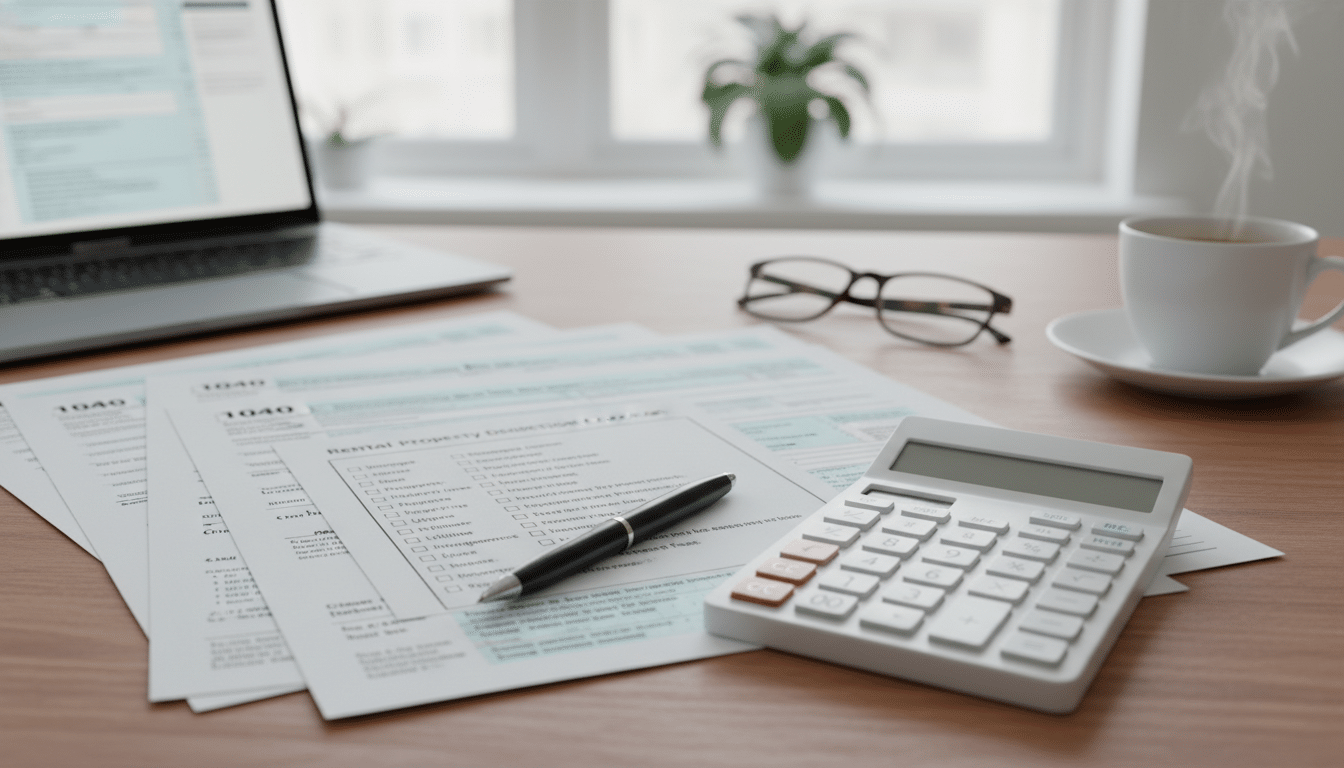
Understanding the tax rules and legal responsibilities of rental property investing helps protect your income, reduce liabilities, and avoid costly mistakes as a landlord.
What You Can Deduct
The IRS allows deductions for mortgage interest, property taxes, insurance, maintenance, repairs, and property management fees. Depreciation is the largest benefit. You can write off the building value over 27.5 years, which reduces taxable income even when the property earns a profit.
A 1031 exchange lets you sell a rental and roll the proceeds into another property without paying capital gains tax immediately. This is a key strategy for scaling a portfolio.
Know Landlord Laws
Fair Housing laws apply to every rental in the US. You cannot discriminate based on race, religion, national origin, sex, disability, or family status. Security deposit rules vary by state. Eviction follows strict legal steps. You cannot lock out a tenant or shut off utilities without a court order.
Protect Yourself with Insurance
Landlord insurance costs more than standard homeowner coverage but protects rental income if the property becomes uninhabitable. An umbrella policy adds extra liability coverage. Require tenants to carry renter’s insurance.
Common Rental Property Investing Mistakes to Avoid
Avoiding common rental property investing mistakes helps protect your cash flow, reduce risks, and improve your chances of building a profitable real estate portfolio.
- Underestimating expenses. Budget conservatively and keep cash reserves. Roofs leak. Vacancies happen. Taxes rise.
- Skipping market research. Buying in a city with a falling population or rising vacancies is a slow loss. Always verify job growth, demand, and vacancy rates.
- Waiving tenant screening. A bad tenant can cause property damage and force a costly eviction. Never skip background checks to fill a vacancy faster.
- Overpaying for the property. Profit is made at purchase. If the numbers do not work at the asking price, walk away.
- Ignoring legal requirements. Fair Housing violations carry heavy fines. Improper evictions can cost thousands. Know the rules in your state before you rent.
Is Rental Property Investing Right for You?
Rental property investing suits people with stable income, solid cash reserves, and patience for a long-term strategy. You need to handle problems without panic and make decisions based on data, not emotion.
- Works well for: Investors with 12+ months of personal expenses in savings, time to research markets, and a plan for tenant management.
- Works less well for: People who need immediate high returns, have no cash reserves, or are buying based on hope rather than numbers.
The investors who do well are not luckier. They research markets, run conservative numbers, screen tenants carefully, and hold properties long enough for compounding to work. That is the full picture of rental property investing.
Frequently Asked Questions
How much money do you need to start rental property investing?
Expect to need $30,000 to $50,000 for a typical starter investment property. This covers a 20-25% down payment, closing costs, and a cash reserve for repairs.
What is a good rental yield for investment properties?
A gross rental yield of 8-12% is strong in most US markets. Divide annual rent by the purchase price and multiply by 100 to calculate it.
Is rental property investing still profitable in 2026?
Yes, when the numbers work. High interest rates have made positive cash flow harder in expensive markets. Midwest and Southeast cities offer better cash flow potential at lower entry prices right now.
Can I use an FHA loan for a rental property?
Yes, if you live in one unit of a multi-family property for at least one year. This house hacking approach gives you a 3.5% down payment while generating rental income from the other units.
Should I manage my rental property myself or hire a manager?
Self-manage if the property is within 30 minutes and you have time for tenant issues. Hire a manager if you own multiple properties, live far away, or value your time at more than the 8-12% management fee.
What is the 50% rule in rental investing?
Budget 50% of gross rent for non-mortgage expenses, including taxes, insurance, maintenance, and vacancies. It is a rough filter to check whether a deal has real cash flow before you run full numbers.
Final Thoughts on Rental Property Investing
Rental property investing builds real wealth when you apply the right strategy. Pick a market with job growth and low vacancy. Run the numbers honestly and conservatively. Screen tenants without shortcuts. Keep cash reserves for repairs and empty months.
The math compounds over time. Three properties earning $350 per month add up to $12,600 per year. Ten properties reach $42,000 per year. That is before appreciation adds more equity on top.
Start with one property, learn the process from the ground up, and scale with confidence.