Struggling to translate procurement victories into bottom-line impact that actually impresses your CFO? You’re not alone.
While many teams boast about “great deals,” the bridge between a signed contract and a firmed-up bank balance is often missing.
In this masterclass, we’ll dive into the mechanics of financial validation and the crucial distinction between budget-shaving and simple price-dodging.
Are you ready to swap anecdotal wins for a data-backed legacy? Let’s turn your department into a verified profit engine.
What Procurement Cost Savings Mean In Practice?
What counts as real savings in your organization? Getting this right builds credibility with finance and stakeholders. Procurement cost savings go beyond simple price cuts.
Real savings happen when you spend less than your baseline while maintaining or improving quality.
This includes negotiating lower prices, securing better payment terms, reducing shipping costs, and improving operational efficiency.
The key difference between perceived savings and real savings is whether the organization actually spends less while maintaining or improving performance
Direct vs indirect savings explained with procurement examples:
| Direct Savings | Indirect Savings |
|---|---|
| Lower unit prices after negotiation | Time saved through faster processes |
| Volume discounts from supplier consolidation | Fewer defects reduce rework costs |
| Rebates and early payment discounts | Better inventory management |
| Reduced shipping and logistics costs | Standardization simplifying maintenance |
Why actual savings must be measurable and repeatable:
To be sustainable, procurement savings must meet three practical criteria. Real savings must be:
- Measurable against a documented baseline
- Repeatable over time
- Validated by finance records
Without these three elements, you have estimates, not confirmed savings.
Now that you know what procurement cost savings means, how do you classify different types of savings correctly? The following section breaks down the key differences to maintain reporting accuracy and stakeholder trust.
Cost savings vs cost avoidance vscost reduction
Are you reporting the correct type of savings? Understanding the differences among these three terms keeps your procurement team aligned with finance expectations.
Simple definitions that procurement and finance teams agree on:
- Cost savings: You pay less than your documented baseline for the same goods or services.
- Cost avoidance: You prevent a price increase or added expense.
- Cost reduction: An umbrella term covering both savings and avoidance.
|
When to Classify Savings As Avoidance Instead Of Reduction? Use cost avoidance when you prevent future increases, but do not spend less than before. This includes avoiding inflation adjustments, preventing scope creep charges, and stopping unnecessary add-on services. |
With clear definitions in place, how do you decide which cost-saving approach to use first? The following section introduces a practical framework for prioritizing your procurement efforts.
A Framework To Select The Right Cost-Saving Approach
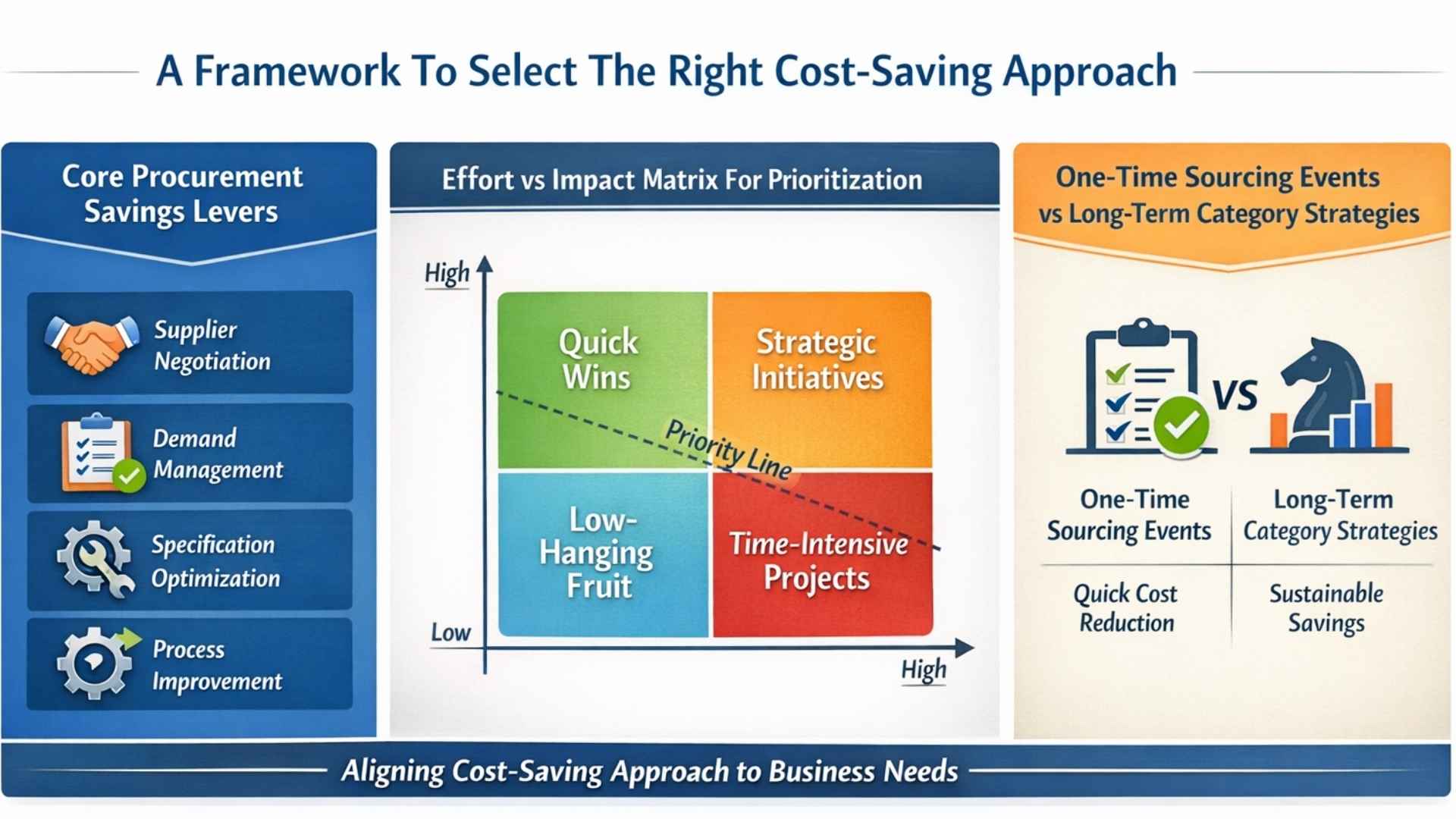
Which savings opportunities should you tackle first? A clear framework helps you focus on high-impact activities that deliver results quickly.
1. Core Procurement Savings Levers:
Your main options for reducing costs include:
- Price optimization: Negotiate better rates or run competitive bids
- Demand management: Reduce what you buy or standardize specifications
- Supplier consolidation: Work with fewer vendors for better terms
- Process improvement: Fix inefficiencies that waste time and money
- Contract compliance: Ensure negotiated terms are actually used
2. Effort vs Impact Matrix For Prioritization:
Use this simple grid to decide where to focus your resources:
| Basis | High Impact | Low Impact |
|---|---|---|
| Low Effort | Quick wins (do these first) | Fill-in activities |
| High Effort | Major projects (plan carefully) | Avoid unless required |
This matrix helps you prioritize opportunities based on realistic resource constraints.
3. One-Time Sourcing Events vs Long-Term Category Strategies:
Quick sourcing events deliver fast savings but may not last. Category strategies take longer to build but create sustained results through supplier relationships, demand control, and continuous improvement.
Before you can apply any framework, you need clear visibility into what you are spending and where the most significant opportunities hide in your data.
Spend Visibility and Opportunity Identification
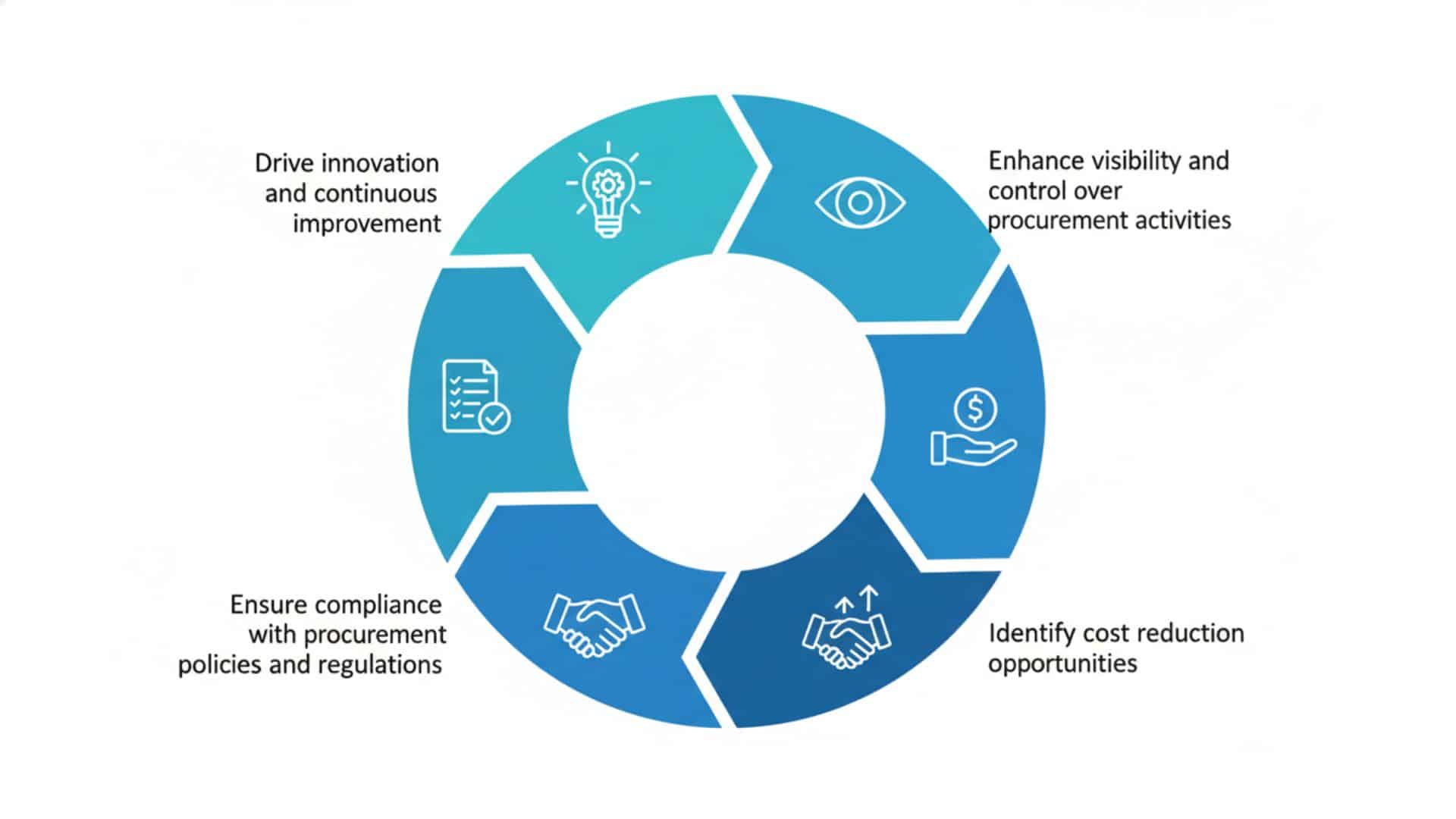
Can you quickly tell where your company spends the most money? If not, you are missing significant savings opportunities hidden in your data.
1. Importance Of Clean, Classified Spend Data:
Clean spend data shows:
- Who bought what from which supplier?
- How much was spent and when?
- Which category does each purchase belong to?
Without this clarity, you cannot identify patterns or find savings. Start by consolidating invoices, purchase orders, and payment records into one system.
Then classify spending by category using standard codes.
2. Identifying High-Impact Categories And Suppliers
Focus on categories where you spend the most. Apply the 80/20 rule: typically 20% of categories account for 80% of total spend.
Also, look at supplier concentration. Are you buying the same items from multiple vendors?
| How Variance and Fragmentation Signal Savings Potential?
High price variance for similar items indicates savings potential. If one department pays $50 and another pays $75 for the same product, consolidation can reduce costs. Fragmented suppliers also signal an opportunity for volume discounts |
Once you have visibility into spend patterns and opportunities, the next step is applying proven sourcing methods to capture measurable savings from your suppliers.
Strategic Sourcing Methods That Drive Measurable Savings
How do you turn spend visibility into actual cost reductions? Strategic sourcing applies structured methods to get better deals from suppliers.
1. Competitive Sourcing And Event Design
Running competitive events forces suppliers to offer their best prices.
RFP and RFQ structuring:
- RFP (Request for Proposal): Use for complex buys where you need detailed solutions
- RFQ (Request for Quote): Use for simple purchases with precise specifications
- Structure questions to compare apples to apples
- Set clear evaluation criteria before sending requests
Lotting strategies and scenario analysis
Break large purchases into smaller lots to attract more bidders.
Test different scenarios: single supplier vs multiple suppliers, annual contracts vs multi-year deals.
Run the numbers before deciding.
2. Negotiation Strategies That Go Beyond Price
Effective negotiation looks at total value, not just the unit price on the invoice.
Price is important, but other terms drive value too:
- Volume consolidation and tiered pricing
- Combine purchases across departments to qualify for volume discounts.
- Negotiate tiered pricing where rates drop as volume increases.
- Index-linked pricing and rebates
Link prices to commodity indexes to share market risk. Negotiate year-end rebates based on total spending thresholds.
3. Contract execution and compliance
Winning a better contract means nothing if people do not use it.
Preventing savings leakage after the award:
- Track actual purchases against contracted suppliers
- Set up alerts when buyers go off-contract
- Calculate leakage monthly
Ensuring negotiated terms are actually used:
- Make contract terms visible at the point of purchase
- Train teams on new agreements
- Monitor compliance through spend reports
Strategic sourcing delivers one-time gains, but sustained procurement cost savings require ongoing category management that keeps results flowing year after year.
Category Management For Sustained Procurement Cost Savings
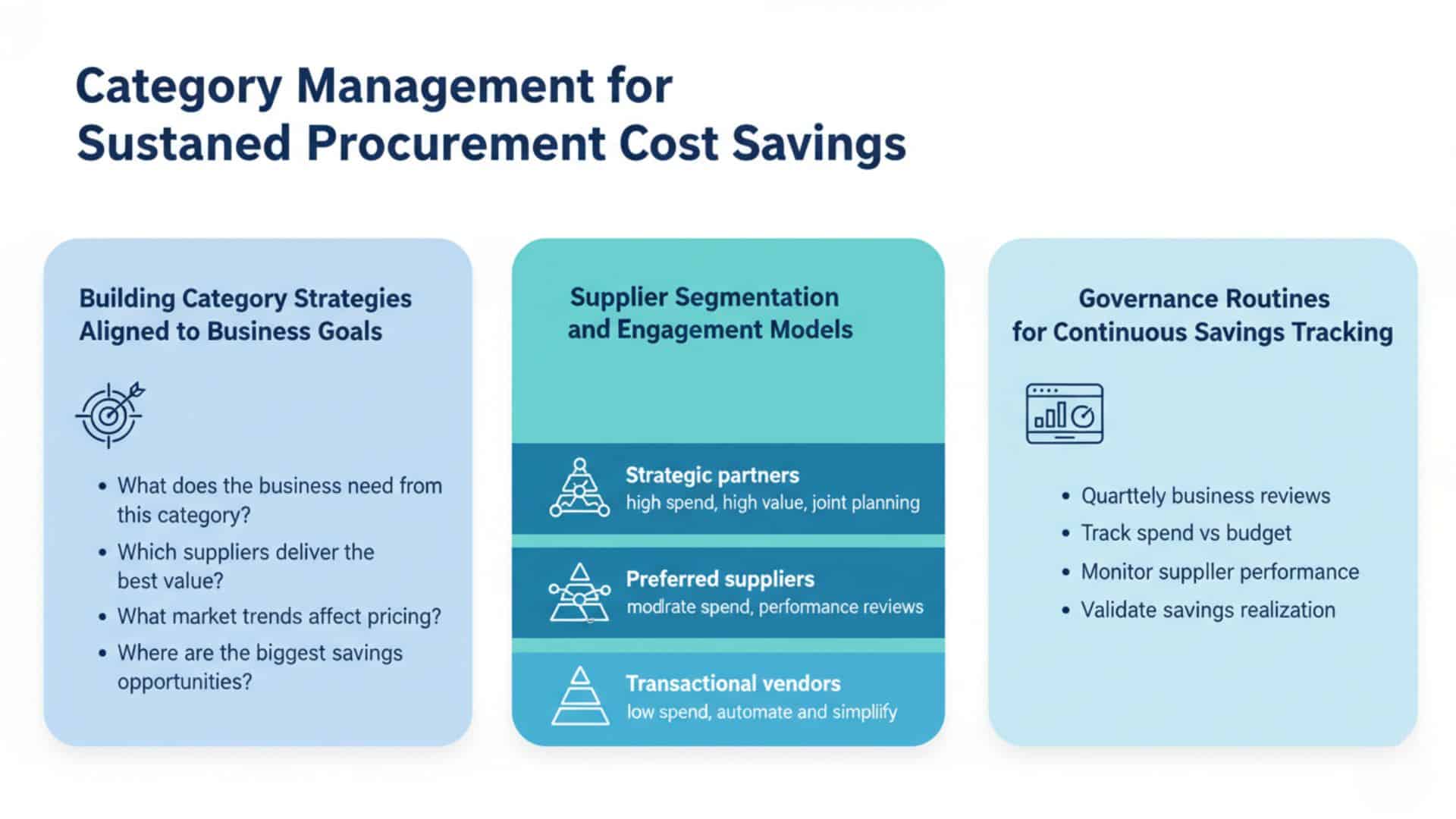
How do you keep savings flowing year after year? Category management turns one-time wins into long-term value through structured planning and supplier relationships.
1. Building Category Strategies Aligned To Business Goals:
Each spending category needs its own plan. Start by asking:
- What does the business need from this category?
- Which suppliers can deliver the best value?
- What market trends will affect pricing?
- Where are the most significant savings opportunities?
Build a 1-3 year roadmap that connects procurement actions to business priorities.
2. Supplier Segmentation And Engagement Models:
Not all suppliers deserve the same attention. Segment them based on spend and strategic importance:
- Strategic partners: High spend, high value. Invest in joint planning and innovation.
- Preferred suppliers: Moderate spend. Maintain regular performance reviews.
- Transactional vendors: Low spend, low risk. Automate and simplify.
3. Governance Routines For Continuous Savings Tracking:
Set up quarterly business reviews to track progress. Monitor actual spend vs budget, supplier performance, and savings realization. Adjust your strategy when market conditions change.
While category management optimizes what you buy from suppliers, demand management focuses on controlling how much you buy in the first place.
Demand Management And Specification Optimization
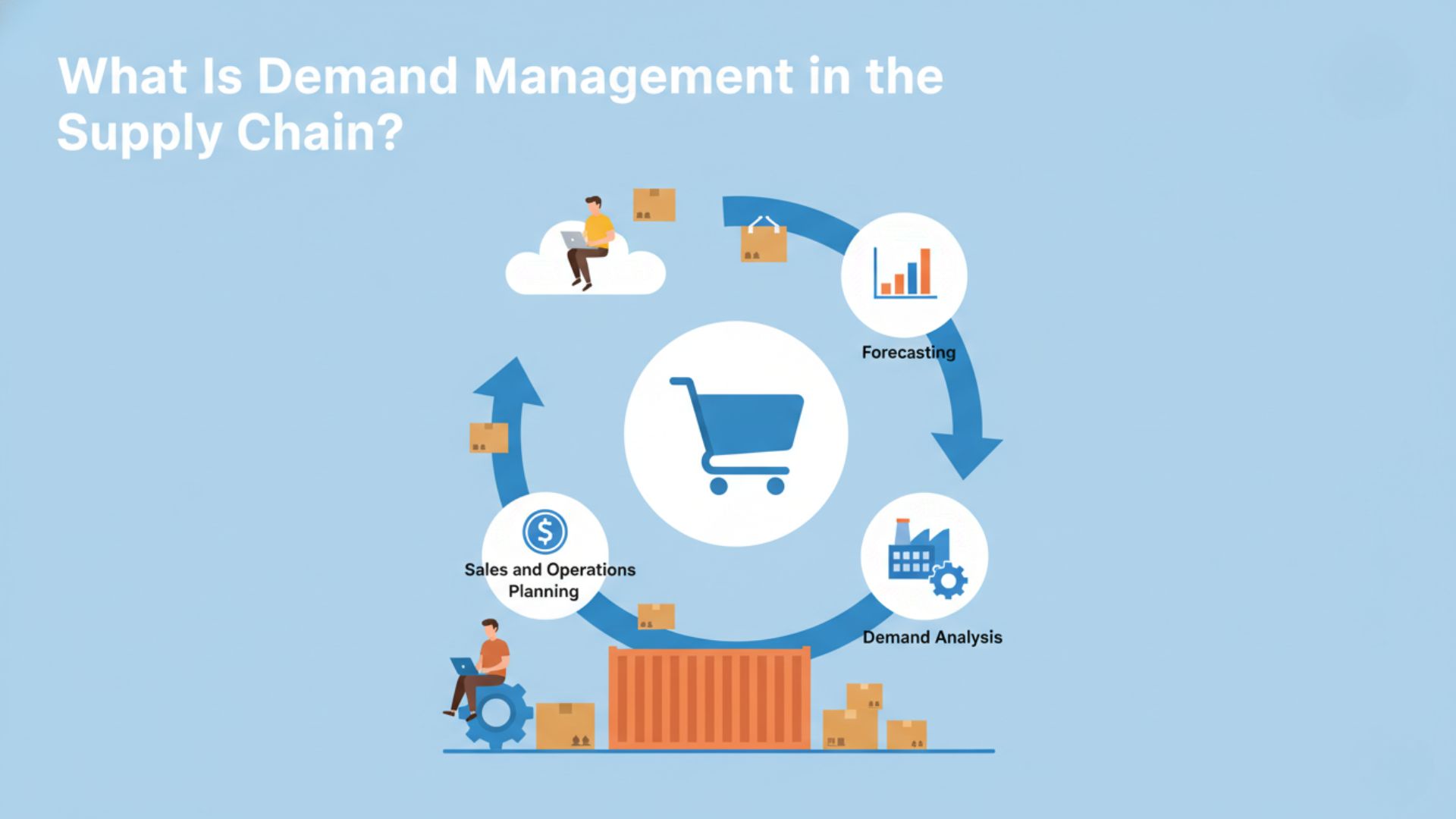
What if you could reduce costs by buying less or buying smarter? Demand management controls spending at the source before purchase orders go out.
1. Controlling Demand Without Hurting Operations
Reducing demand does not mean starving your business. It means buying what you actually need.
Standardization and internal alignment:
- Agree on standard products across departments
- Limit approved options to essential variants
- Create preferred item catalogs with pre-negotiated terms
- Get stakeholder buy-in before implementing restrictions
Approval workflows and guided buying:
Set spending thresholds that trigger approvals. Route high-value requests through procurement for review. Use guided buying tools that suggest approved alternatives before non-standard purchases.
2. Specification And Scope Optimization
Many teams ask for more than they need. Tightening specifications cuts costs without cutting corners.
Value engineering and fit-for-purpose sourcing:
Challenge specifications that add cost without adding value. Ask: Do we need premium quality for this use case? Can we use standard materials instead of custom?
Reducing unnecessary complexity in requirements:
Simplify technical requirements. Remove nice-to-have features from must-have lists. Fewer customizations mean lower prices and faster delivery.
Controlling demand and specifications is powerful, but you also need to look at the total cost of ownership to see the complete financial picture beyond initial purchase prices.
Total Cost Of Ownership And Cost Transparency Methods
Are you choosing suppliers based only on purchase price? You might be missing hidden costs that make the “cheapest” option actually the most expensive.
1. What TCO Includes And Why It Matters?
Total Cost of Ownership (TCO) adds up everything you pay over the product’s lifetime:
- Purchase price
- Shipping and handling fees
- Installation and setup costs
- Training and support expenses
- Maintenance and repair costs
- Energy or operating costs
- Disposal or end-of-life costs
A product with a low sticker price but high maintenance costs often costs more than a pricier alternative with lower upkeep.
Should-cost analysis and cost breakdown models:
Should-cost models estimate what something should cost based on materials, labor, and overhead. Break down the supplier’s quote to spot inflated margins or inefficiencies.
This gives you negotiation leverage backed by data.
2. When To Use TCO Instead Of Unit Price Comparison?
Use TCO for:
- Equipment and machinery purchases
- Multi-year service contracts
- Items with significant operating costs
- Products requiring regular maintenance
Stick to unit price for commodities and low-value, one-time purchases.
Beyond analyzing costs, your relationships with suppliers can become a source of ongoing savings when managed strategically.
Supplier Management As A Cost Savings Lever
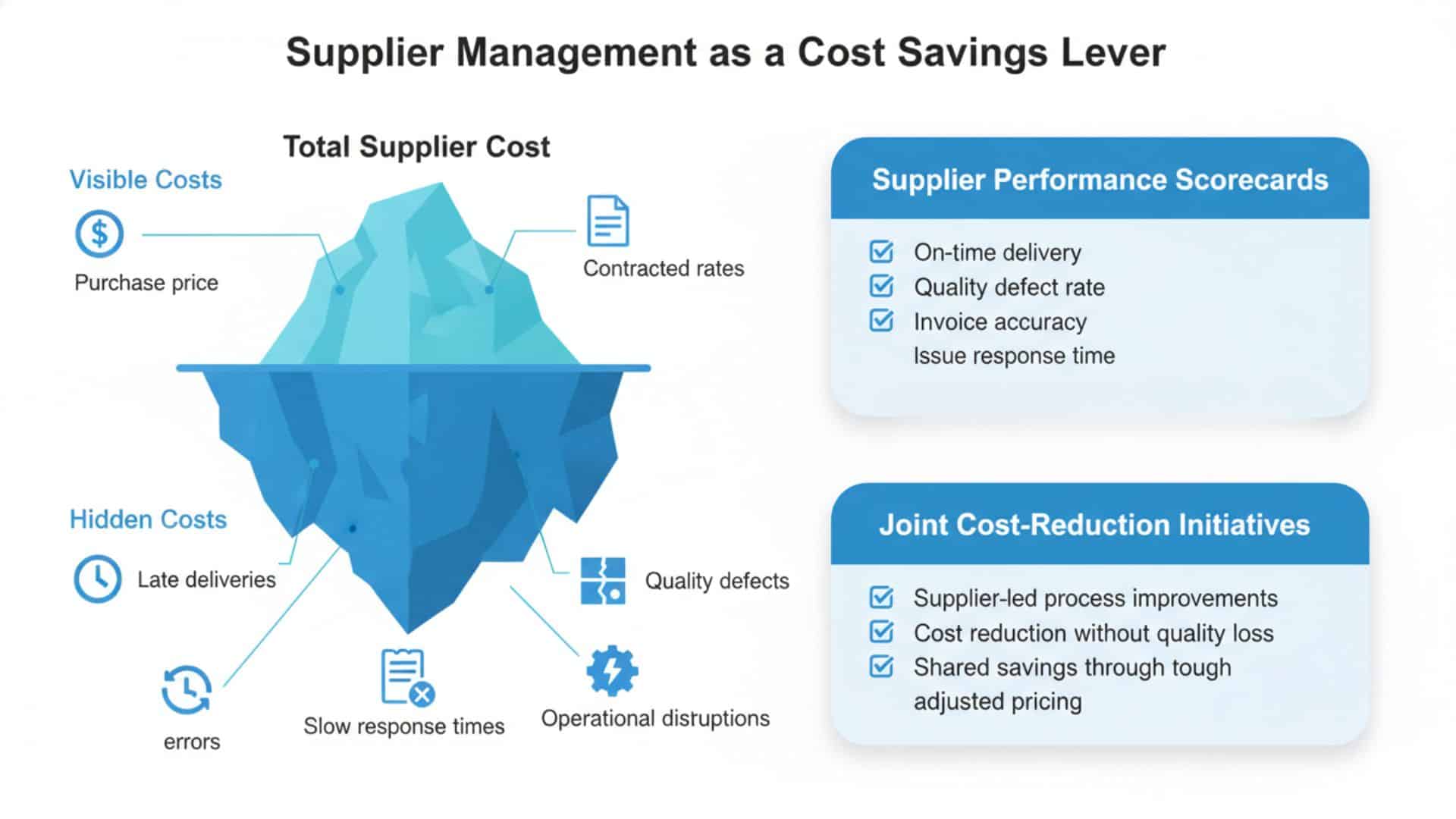
Your suppliers hold the key to more than just delivering goods. Strong supplier relationships can reduce costs, improve quality, and prevent expensive problems.
Performance scorecards tied to financial outcomes:
Track supplier performance on metrics that affect your bottom line:
- On-time delivery rates
- Quality defect percentages
- Invoice accuracy
- Response time to issues
Link these scores to contract renewals and volume commitments. Suppliers improve when performance has consequences.
Joint cost-reduction initiatives
Work with key suppliers to find mutual savings. They know their processes better than you do. Ask them to suggest ways to reduce costs without cutting quality. Share the savings through adjusted pricing.
Even the best supplier strategies fail without strong internal processes that prevent savings from leaking through policy gaps and process weaknesses.
Process And Policy Improvements That Protect Savings
Negotiating better prices means nothing if employees bypass your contracts and buy from whoever they want. Strong processes lock savings in place.
1. Maverick Spend Prevention
Maverick spending happens when buyers ignore approved contracts and suppliers. This creates several problems:
- Lost volume discounts
- Duplicate supplier relationships
- No visibility into total spending
- Negotiated terms go unused
Stop maverick spending by making approved suppliers easier to use than unapproved ones.
2. Intake And Procurement Policy Alignment
Create a straightforward intake process for purchase requests. Define when procurement must be involved. Set spending thresholds that trigger reviews. Make the policy simple enough that people actually follow it.
P2P process improvements that support savings realization:
Your procure-to-pay (P2P) process should guide users toward approved suppliers:
- Build catalogs with pre-negotiated items
- Block purchases from non-approved vendors
- Automate approvals for routine buys
- Flag unusual spending patterns for review
When doing the right thing is also the easiest thing, compliance improves naturally.
Process improvements provide the foundation, but adding the right digital tools and analytics can multiply your cost-saving efforts across the entire organization.
Measuring And Reporting Procurement Cost Savings
How do you prove your savings are real? Accurate measurement and transparent reporting build trust with finance and leadership teams.
1. Defining Baselines And Savings Ownership:
Every savings claim needs a baseline: what you would have spent without action. Document this before negotiations start.
Common baseline types:
- Last year’s actual spend: For recurring purchases with stable volume
- Current contract price: When renegotiating existing agreements
- Budget allocation: For new initiatives or planned spending
- Market price index: For commodity purchases tied to market rates
Assign clear ownership. Who is responsible for tracking and reporting each savings initiative?
2. Realized vs Forecast Savings:
Not all savings are equal in the eyes of finance teams.
| Forecast Savings | Realized Savings |
|---|---|
| Projected based on contract terms | Shows up in actual spending records |
| Useful for planning and commitments | What finance validates and counts |
| Estimated future impact | Proven historical results |
Report both, but clearly label which is which. Only realized savings appear in financial statements and budgets.
Even with solid measurement practices, inevitable common mistakes can still limit your procurement cost savings and damage stakeholder confidence in your results.
Common Mistakes That Limit Procurement Cost Savings
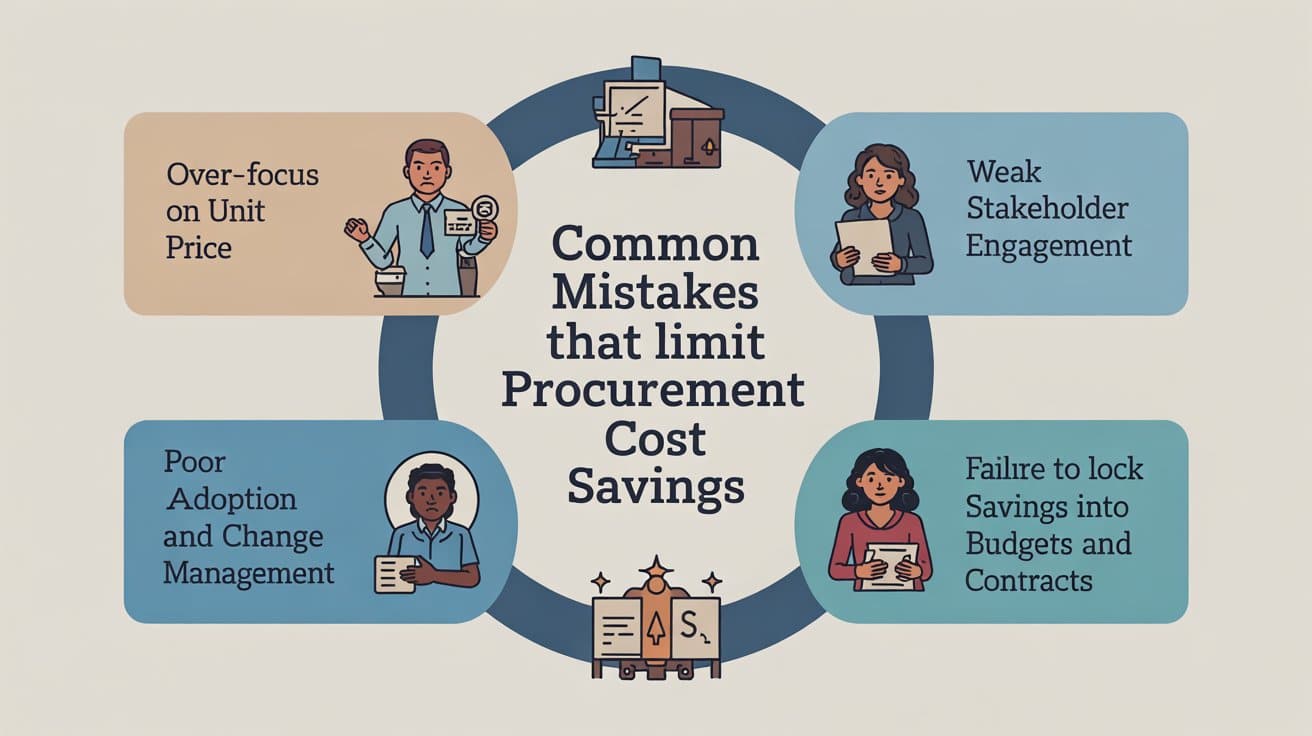
Why do some procurement teams struggle to deliver results? Avoiding these common pitfalls helps you capture and keep the savings you work hard to achieve.
1. Over-Focus on Unit Price
Chasing the lowest unit price ignores total cost. A cheap supplier with poor quality creates rework costs. Late deliveries disrupt production. Always look at the complete picture.
2. Weak stakeholder engagement
When business units feel excluded from decisions, they resist new contracts. Involve stakeholders early. Listen to their needs. Get their commitment before implementation.
3. Poor Adoption And Change Management
If users keep buying from old suppliers, savings never materialize. Communicate changes clearly. Train teams on new processes. Make approved options easy to find.
4. Failure To Lock Savings Into Budgets And Contracts
Finance must reduce budgets to permanently capture savings. Otherwise, departments spend the “saved” money elsewhere. Work with finance to adjust budgets and build compliance requirements into contracts.
Pro Tips: Review savings quarterly, document baselines early, celebrate wins, and track actual adoption rates.
These mistakes are avoidable with the right approach, but what does success actually look like when procurement operates as a proper strategic function within your organization?
Conclusion
Transforming your procurement department from a simple cost center into a strategic profit driver is no small feat; it requires shifting focus from surface-level discounts to deep, validated financial impact.
By mastering the balance between cost avoidance and hard savings, and aligning your category strategies with total cost of ownership, you secure more than just lower prices; you secure organizational trust.
Now that you have the roadmap to overhaul your spending DNA and eliminate maverick habits, which of these levers will you pull first to impress your CFO?
Ready to see your bottom line grow? Start by auditing your top three spend categories today and turn those hidden leaks into verified wins!
Frequently AskedQuestions
How Does Digital Transformation Impact Procurement Savings?
Automation reduces manual errors and accelerates cycle times. By utilizing AI-driven analytics, teams can uncover patterns and negotiation levers that traditional spreadsheets often overlook.
Can Sustainable Sourcing Actually Lower Long-Term Costs?
Yes. Eco-friendly initiatives often reduce waste and energy consumption. Furthermore, proactive green sourcing mitigates the risk of future regulatory fines and enhances brand reputation.
What Role Does Employee Training Play in Cost Reduction?
Educated staff identify better alternatives and follow compliance protocols. When teams understand the “why” behind sourcing policies, they are less likely to engage in maverick spending.
How Do Currency Fluctuations Affect Global Procurement Savings?
Exchange rate volatility can erase negotiated gains. Using hedging strategies or fixed-rate contracts helps stabilize budgets when dealing with international vendors and diverse currencies.
Why Is a Diverse Supplier Base Important for Savings?
Relying on a single source creates bottleneck risks. A diverse vendor pool fosters healthy competition, drives innovation, and ensures supply chain continuity during local market disruptions.