Starting a rental car business takes more than buying a few cars and listing them online. You need the right licenses, enough capital, a fleet you can keep running, and pricing that actually covers your costs.
This post covers every step, from choosing your model to getting your first booking. If you plan carefully and track your numbers from day one, you can make real money here.
What Does Starting a Rental Car Business Actually Require?
Startup costs typically range from $50,000 to $150,000, depending on fleet size and location. That budget covers vehicle acquisition, insurance deposits, licensing fees, booking software, and marketing for the first several months.
Insurance runs $1,500 to $3,000 per vehicle each year. Plan for it to take 15 to 25 percent of your total revenue. Vehicle costs, including purchase payments, maintenance reserves, and depreciation, account for 60 to 70 percent of startup spending.
The business runs on fleet usage rates. If your cars sit idle, you pay insurance and maintenance on dead inventory. Starting with 3 to 5 vehicles lets you test demand without tying up too much capital too early.
Which Business Model Should You Choose?

Pick a model before spending anything on vehicles. Each option has different capital needs, risk levels, and profit potential.
- Traditional fleet rental: You own the cars and rent directly to customers. The most capital-intensive model, but you keep full control of pricing and customer experience.
- Peer-to-peer platforms: List vehicles on Turo or Getaround. Lower startup costs, but platform fees reduce margins. Good for testing demand before going independent.
- Franchise operations: Buy into a recognized brand like Hertz or Enterprise. You get national marketing and existing booking systems in exchange for ongoing royalties.
- Corporate-only model: Focus exclusively on businesses needing regular vehicle access. Revenue is steadier, but landing those contracts takes direct outreach and patience.
- Subscription model: Offer monthly vehicle access plans to customers who want flexibility without leasing. Requires more planning around fleet rotation and contract terms.
For most first-time operators, starting on a peer-to-peer platform is the lowest-risk entry point. Move to an independent operation once you understand what customers in your market actually want.
Research Your Market Before Committing Capital
Market research is the step most new operators skip. Skipping it is how you end up with five cars and no customers.
Check search volume for “car rental [your city]” using Google Keyword Planner. High volume confirms active demand. Low volume is a warning sign worth investigating before you spend anything.
Call competitors and ask about pricing and availability. Read their Google reviews carefully. Patterns in complaints reveal service gaps you can address. A competitor sitting at 3 stars with consistent complaints about slow check-in or poor vehicle condition is a real opening.
Check your city’s event calendar. Conferences, festivals, and sporting events create short-term demand spikes. Operators who plan around these events capture bookings that others miss.
Talk directly to hotel front desk managers. If hotels regularly refer guests to rental companies, that signals steady demand near that location.
Airport proximity drives 40 to 50 percent of rental car bookings in most markets. If your location is not near an airport or major hotel corridor, adjust your approach. Build your marketing around the customers who are actually in your area.
Write a Business Plan with Real Numbers
A business plan is not paperwork for a bank. It forces you to face real costs before you spend real money.
Break down startup costs in detail. Include vehicle acquisition at $15,000 to $30,000 per used car. Add commercial insurance, licensing fees, booking software, and a six-month marketing budget. Vague line items are where financial surprises hide.
Build a cash flow projection for the first 24 months. Account for seasonal dips. The rental car business slows in off-peak travel months. The period before break-even is when most new operators run out of cash and quit.
Set a clear break-even target. Most small operations take 18 to 36 months to recover startup costs. That estimate assumes 60 to 70 percent fleet usage at average daily rates. Projections showing break-even at month six are usually wrong.
Calculate your pricing floor before you open. Every vehicle needs to cover its acquisition cost, insurance, maintenance, and depreciation per rental day. Any rate below that floor is a loss.
Legal Requirements for Starting a Rental Car Business
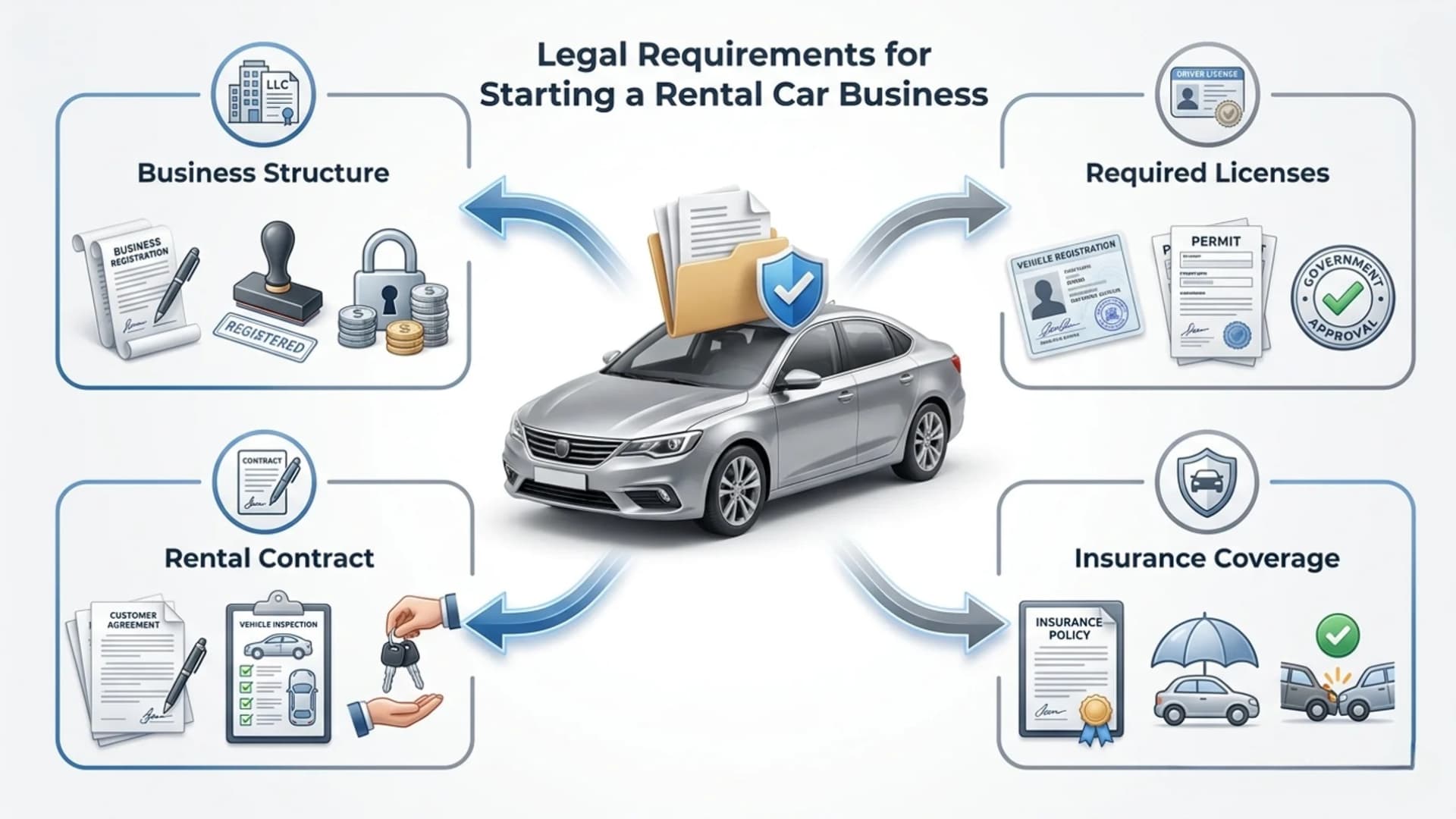
The legal setup protects your personal finances if something goes wrong. Skipping it is not worth the short-term savings.
Choose Your Business Structure
An LLC is the standard choice for small rental car operations. It separates your personal assets from business liability. If a renter has an accident and a lawsuit follows, your home and savings are not at risk. A sole proprietorship offers no such protection.
Get the Required Licenses
You will need a general business license, a state motor vehicle rental license, and a sales tax permit. Some states require commercial vehicle registration for each car in your fleet. Requirements vary by state, so verify with your state’s department of transportation before opening.
Get the Right Insurance
The minimum coverage includes commercial auto liability, collision and damage coverage, general business liability, and garage keepers’ liability. If you hire staff, workers’ compensation is legally required. Umbrella policies add protection above standard limits and are worth the extra cost as your fleet grows.
Use a Solid Rental Contract
Your agreement needs to cover driver qualifications and vehicle condition at pickup and return. It must also address damage responsibility, fuel policy, mileage limits, late return penalties, and contract violations. A weak contract leaves you unable to recover costs for damage you cannot prove the renter caused.
Build Your Fleet Smartly When Starting a Rental Car Business
A profitable rental car business depends on choosing the right vehicles, managing costs, and maintaining reliability. Build a fleet strategy that supports demand without creating unnecessary expenses.
New vs. Used Vehicles
New vehicles cost more upfront but carry better warranties. Used vehicles cut acquisition costs by 30 to 50 percent, but maintenance expenses rise, and useful service life is shorter.
The practical sweet spot is 2 to 3 year old certified pre-owned cars with remaining factory warranty coverage. Running the same make and model across your fleet also simplifies parts stocking and routine service.
Plan for Depreciation
A vehicle loses 20 to 30 percent of its value in year one. After that, expect a 15 to 20 percent drop each year. Price in that drop when you buy. When you sell, the proceeds offset part of your next purchase.
Replace cars at 100,000 to 150,000 miles. Beyond that, repair costs eat into margins and breakdowns disrupt active rentals.
Set a Maintenance Budget
Allocate 10 to 15 percent of each vehicle’s value per year for repairs and scheduled service. A $25,000 car needs a $2,500 to $3,750 annual reserve. Skipping that budget does not save money. It shifts the cost to a worse time.
When to Add More Vehicles
Only expand the fleet after your current cars hit a 75 percent usage rate for three straight months. That figure shows demand is real and consistent, not just a good few weeks.
Set Prices That Cover Your Costs
Pricing too low is one of the most reliable ways to fail in this business. Low rates attract customers but do not pay bills.
Research what competitors charge for similar vehicles in your market. Then calculate your floor: vehicle costs plus insurance plus maintenance plus overhead, plus a 20 to 30 percent margin. Any rate below that floor means you lose money on every rental.
Price 5 to 10 percent below established competitors during the first three to six months. That gap attracts customers away from a known brand without signaling that something is wrong with your service.
Raise rates during peak demand. During holidays, major events, and summer travel season, increase daily rates by 20 to 40 percent. Drop rates by 10 to 20 percent during slow periods to keep cars earning and fleet usage high.
Add-on services build revenue without requiring more vehicles. The table below shows what each add-on typically earns per day.
| Add-On Service | Daily Revenue Added |
|---|---|
| GPS unit | $10 to $15 |
| Additional driver coverage | $10 to $15 per driver |
| Child safety seat | $8 to $12 |
| Collision damage waiver | 20 to 30% of daily rate |
| Airport pickup or delivery | $25 to $50 per trip |
Offer weekly and monthly rates at a 15 to 25 percent discount from the daily equivalent. Longer rentals reduce turnover costs and keep fleet usage high.
Market Your Business to Get Bookings
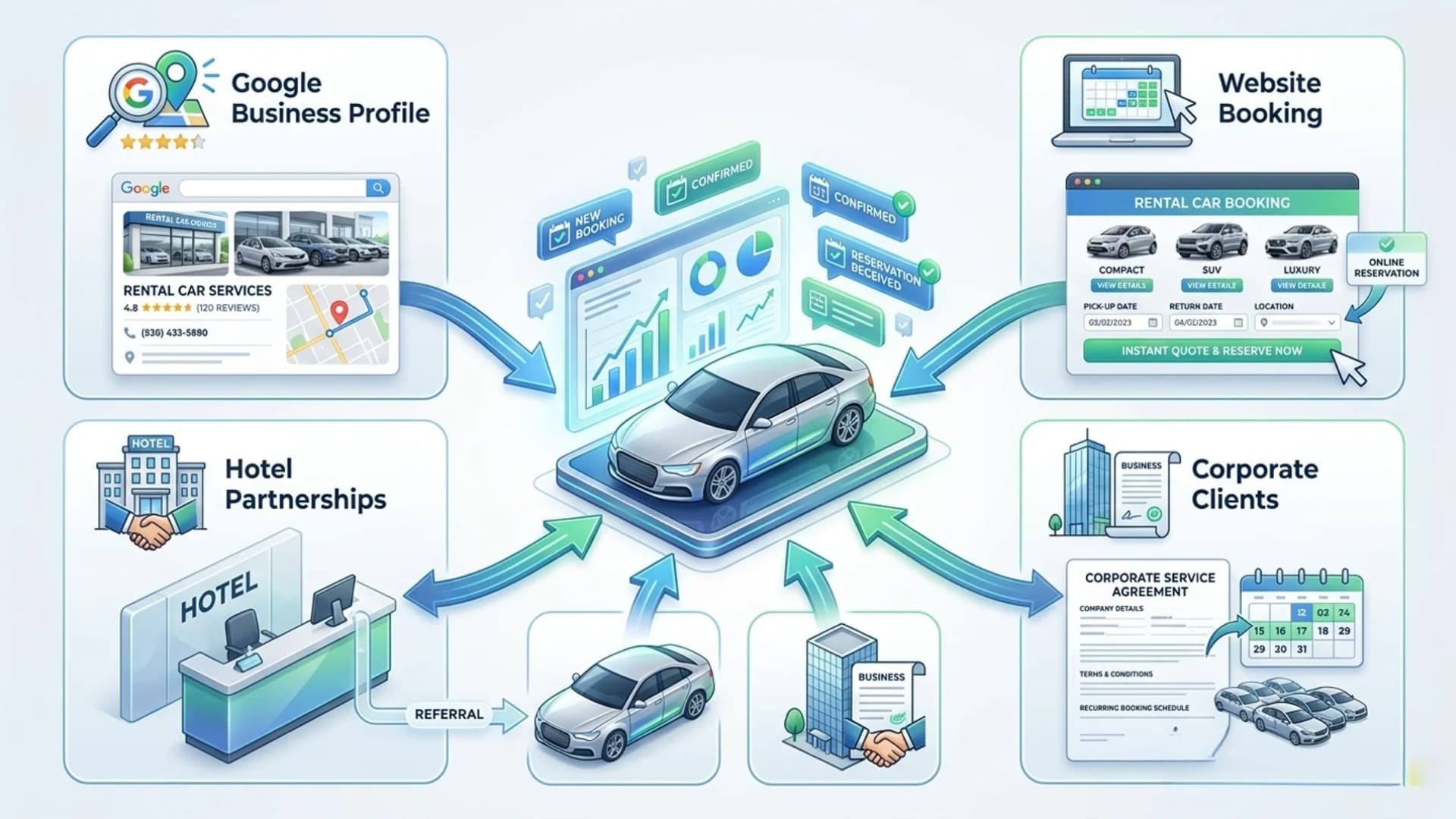
The three most reliable early booking sources are Google, hotel partnerships, and direct corporate outreach.
1. Google Business Profile
Set up your Google Business Profile with accurate hours, fleet photos, and a working phone number. Ask every satisfied customer to leave a review. A 4.5-star rating with 30 or more reviews puts you ahead of competitors who ignore their profile. This is free and works faster than paid advertising for local search.
2. Your Website
Build a mobile-friendly site with online booking and instant quotes. A confusing booking process sends customers to a competitor.
Add a page targeting “car rental in [your city]” with accurate information and real photos. That page, combined with a strong Google Business Profile, will rank above many established competitors in local search results.
3. Hotel Partnerships
Speak directly with hotel front desk managers and propose a referral arrangement. Guests constantly ask hotels for transportation help. One active hotel partnership can generate 20 to 30 bookings per month in a busy travel market.
4. Corporate Clients
Businesses that need vehicles on short notice pay more per rental and book more often than leisure travelers. Reach out to operations managers at companies near your location. A corporate account with even one mid-sized business provides a reliable monthly revenue floor.
Common Mistakes That Sink New Operators
- Buying too many vehicles too fast. Starting with 10 cars before demand is confirmed means paying insurance and maintenance on idle inventory for months.
- Pricing below your cost floor. Calculate the floor before you set any rate. Low rates feel competitive but cannot cover costs.
- Skipping preventive maintenance. A breakdown during a rental damages your reputation and opens you to liability claims. Budget for service from day one.
- Ignoring online reviews. Unanswered negative reviews on Google push potential customers to competitors. Respond to every review within 48 hours.
- Using a weak contract. A rental agreement that does not clearly address damage responsibility will cost you money you cannot recover.
- Not tracking your numbers. Track fleet usage rate, revenue per vehicle, and customer acquisition cost every month. These three figures tell you what is working and what is not.
- Heavy marketing before operations are solid. Driving traffic to a business with slow check-in, poor vehicle condition, and bad reviews makes the problem worse, not better.
Ready to Start a Rental Car Business? Begin Here
Set up your legal structure, pick the right vehicles, price above your cost floor, and keep your fleet maintained. The operators who stay in business are not necessarily the ones with the most cars. They are the ones who track their numbers, protect their ratings, and turn first-time renters into repeat customers.
Start with local market research. Get your numbers on paper. Take the legal steps before spending anything on vehicles. A solid first month of planning saves you from six months of expensive mistakes after launch.
Frequently Asked Questions
How much money do you need to start a rental car business?
Budget $50,000 to $150,000 for a 3- to 5-vehicle operation. That covers vehicles, insurance deposits, licenses, booking software, and a six-month marketing budget.
Can you start a rental car business with just one car?
Yes. List it on Turo or Getaround to test demand with low risk. Move to an independent operation once you understand local demand and have the capital to scale.
How long does it take to break even?
Most small operations take 18 to 36 months to recover startup costs. That assumes 60 to 70 percent fleet usage at market-rate pricing.
Do you need a special license to rent out cars?
Most states require a motor vehicle rental license in addition to a standard business license. Requirements differ by state. Check with your state’s department of transportation before opening.
What insurance does a rental car business need?
At minimum: commercial auto liability, collision and damage coverage, general business liability, and garage keepers’ liability. Workers’ compensation is required once you hire staff.
Is a franchise or independent operation better for beginners?
A franchise gives you brand recognition and booking infrastructure right away. An independent operation gives you full control and higher margins. Franchises cost more upfront and charge ongoing royalties.