
Home purchases rarely go from offer to closing without at least one complication. The roof may need work. The loan may stall. The appraisal may come in below the purchase price. A contingency in real estate is the contract clause that prevents these situations from becoming expensive mistakes.
According to the Zillow Group Consumer Housing Trends Report 2024, 82% of buyers included at least one contingency in their final offer.
This article covers how contingencies work, which types to use, and what your options are when one is not met.
Note: Real estate contracts vary by state and transaction. This article is for general information only. Consult a licensed real estate agent or attorney before making contract decisions.
What Is a Contingency in Real Estate?
A contingency is a clause in a real estate purchase agreement that sets a specific condition. The sale cannot proceed until that condition is satisfied.
Contingencies protect buyers from getting locked into a purchase when something material changes. They give you a defined window to inspect the property, confirm your financing, or verify legal ownership. If a condition is not met within the agreed timeframe, you can typically walk away without losing your deposit.
There are two main types:
- Hard contingency: You must sign off in writing before the condition is removed. Your approval is required.
- Soft contingency: The condition expires automatically at a set deadline. No action needed to remove it.
Both buyer and seller must agree to any contingencies before they become legally binding.
How Does a Real Estate Contingency Work?
A contingency creates a set of tasks that must be completed during a specific period after an offer is accepted. The process works like this:
- The buyer submits an offer with contingencies listed in the purchase agreement.
- The seller accepts the offer.
- The contingency period begins.
- The buyer completes inspections, secures financing, or meets other stated conditions.
- If all conditions are approved, the sale moves toward closing.
- If a condition fails, the buyer can renegotiate or cancel the contract.
Each contingency runs on its own deadline. Missing a deadline changes your position in the contract. Some protections expire automatically. Others require written notice to cancel.
Read every deadline in your purchase agreement carefully before signing.
7 Common Types of Real Estate Contingencies
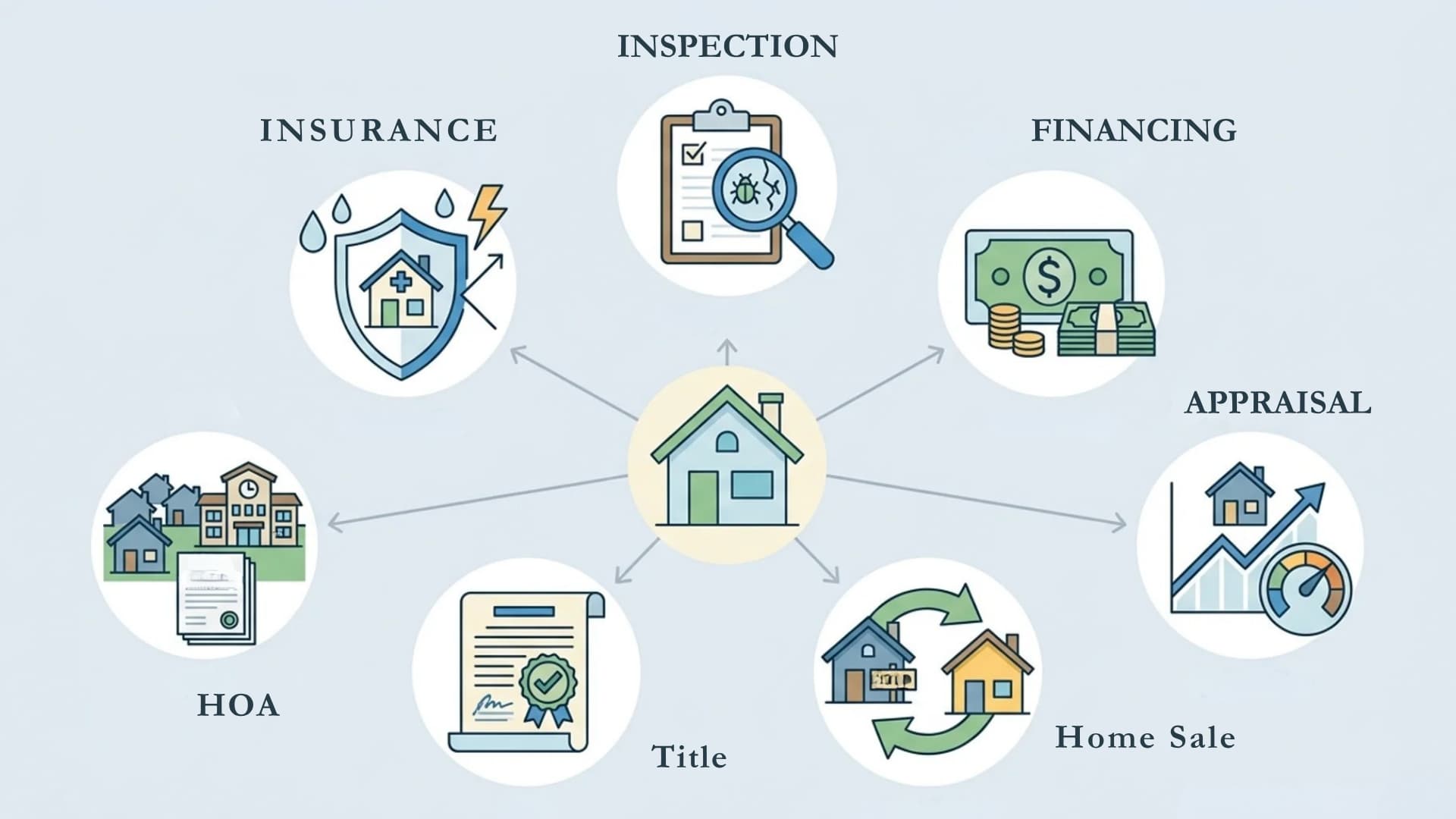
The right contingencies depend on the property, your financing, and the current market. Here are the most common types and what each one covers.
1. Home Inspection Contingency
This gives you the right to have the property professionally inspected, usually within 7 to 10 days of acceptance. If significant problems surface, you can request repairs, a price reduction, a credit, or cancel the contract.
2. Financing (Mortgage) Contingency
A financing contingency protects you if your lender declines the full loan application. Pre-approval is not the same as final approval. This clause typically gives you 21 to 30 days to secure confirmed financing. If the loan falls through, you can exit the contract and recover your deposit.
3. Appraisal Contingency
Lenders require an appraisal to confirm the property’s value supports the loan amount. If the appraisal comes in below the purchase price, you have three options. Cover the gap in cash, renegotiate the price, or cancel the contract. This contingency usually runs one to three weeks.
4. Home Sale Contingency
This makes your offer dependent on selling your current home within a set timeframe. It provides financial protection, but sellers in competitive markets may view it as a weaker offer. A kick-out clause often accompanies this contingency (see below).
5. Title Contingency
A title search confirms legal ownership of the property. If unexpected problems appear, such as a tax lien or a boundary dispute, the seller must resolve them before closing. If they cannot clear the title, you can cancel and recover your deposit.
6. HOA Contingency
For properties governed by a homeowners association, this clause gives you time to review HOA fees, rules, and financial documents. If the documents are not delivered on time, or the restrictions are not acceptable, you can exit the contract without penalty.
7. Homeowners Insurance Contingency
This allows you to confirm that adequate coverage is available at a reasonable cost before committing to the purchase. It is especially useful in areas prone to wildfires, floods, or hurricanes, where coverage can be limited or expensive.
Kick-Out Clause
A kick-out clause is not a buyer contingency. It is a seller’s tool that activates when a home sale contingency is in the contract. It lets the seller keep marketing the property after accepting a contingent offer. If a stronger offer arrives, the original buyer typically has 24 to 72 hours to remove their contingency or step aside. This clause must be written clearly into the purchase agreement.
How Long Do Real Estate Contingencies Last?
Every purchase agreement sets its own deadlines. The timelines below are common across most U.S. markets, but your contract may differ.
| Contingency Type | Typical Timeline |
|---|---|
| Home Inspection | 7 to 10 days |
| Appraisal | 1 to 3 weeks |
| Financing | 21 to 30 days |
| Home Sale | Varies by agreement |
| HOA Review | Varies by state and association |
Extensions are possible but require written agreement from both parties. Do not assume a deadline will be extended automatically.
What Happens If a Contingency Is Not Met?
If a contingency is not satisfied within the agreed timeframe, you have several options depending on the contract terms:
- Request repairs, credits, or a price reduction from the seller
- Renegotiate the contract terms before proceeding
- Cancel the contract and recover your earnest money deposit
Deadlines are critical. Missing one without requesting an extension can put your deposit at risk or remove your right to cancel. Always consult your real estate agent or attorney before letting a deadline pass.
Contingent vs. Pending: What Is the Difference?
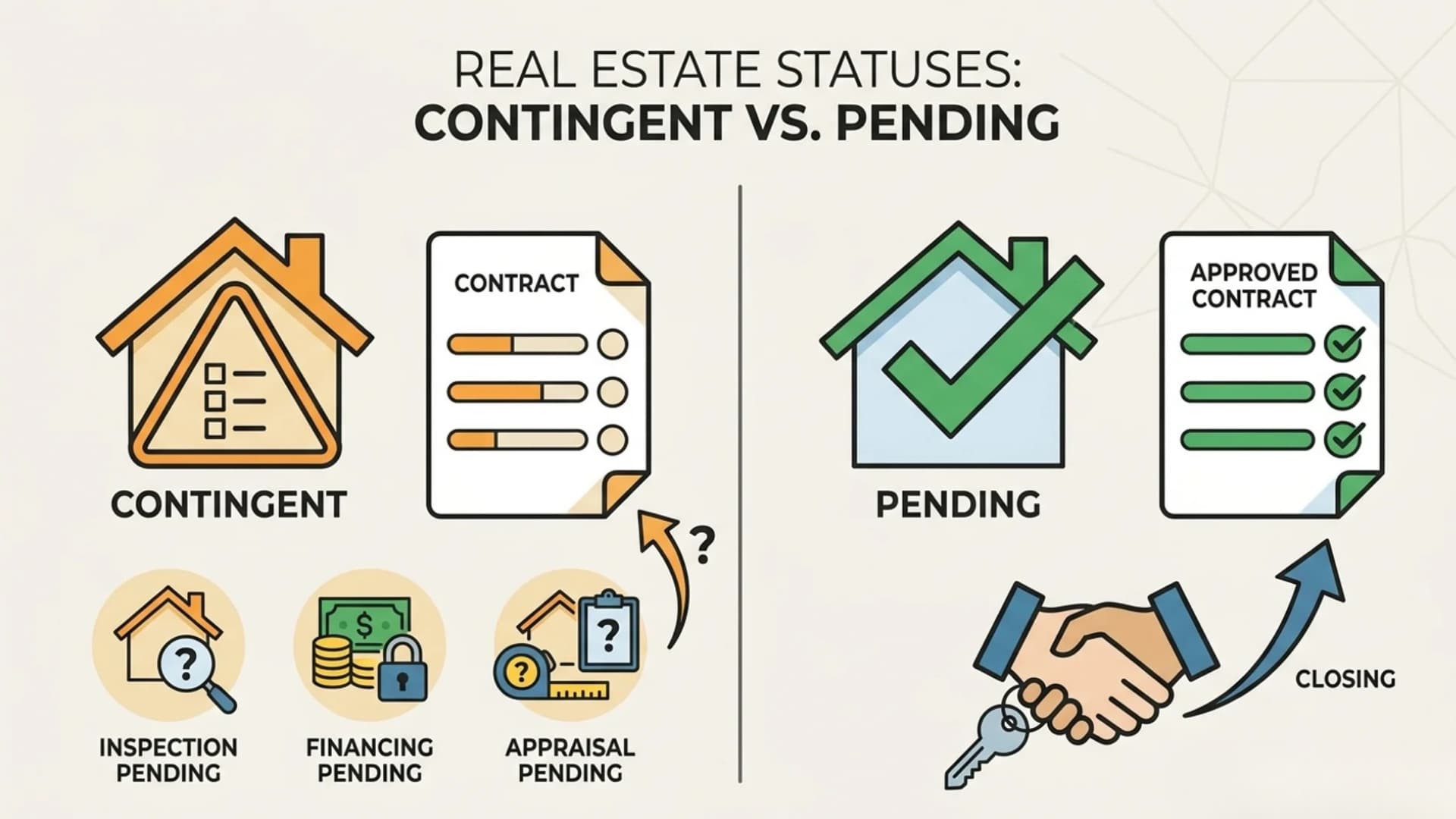
These two listing statuses appear on home searches but mean different things.
| Feature | Contingent | Pending |
|---|---|---|
| Status | Offer accepted, conditions still outstanding | All conditions cleared |
| Sale final? | No | Closing in progress |
| Backup offers? | Sometimes possible | Rarely reopens |
A contingent listing still carries risk for the seller. A pending listing is much closer to a completed sale.
Some MLS platforms use “active with contingency.” This means the seller has an accepted offer but remains open to backup offers. This typically happens when a kick-out clause is in place.
Should You Waive Real Estate Contingencies?
Waiving contingencies can make your offer more attractive to sellers in a competitive market. But removing them increases your financial exposure.
If you waive the inspection contingency and problems surface after closing, you have no contractual recourse against the seller. If you waive the financing contingency and your loan is denied, you may lose your deposit.
The right choice depends on the local market, the property’s condition, and your financial position. Before removing any condition, speak with a licensed real estate agent or attorney who knows your area.
Frequently Asked Questions
Can a seller back out of a contingent offer?
Generally no. Once an offer is accepted, the seller is bound by the contract. A seller can only exit if a specific contract clause permits it.
Does waiving contingencies mean losing your deposit if you cancel?
Yes, in most cases. Without a contingency, you have no protected exit. Canceling puts your earnest money at risk.
What is a contingency removal in real estate?
It is written notice confirming a condition has been satisfied. Once submitted, that protection is gone, and you are more committed to closing.
Can you add contingencies after an offer is accepted?
No. Contingencies must be agreed upon at the time the offer is accepted. Both parties must sign any changes after the fact.
Do contingencies affect closing costs?
Not directly. But price reductions or credits negotiated through a contingency can change the final amount due at closing.
Wrapping It Up
A contingency in real estate is not a formality. It is the clause that sits between you and a costly mistake. Each condition gives you a defined window to inspect, verify, or walk away with your deposit intact.
Inspection results, loan approvals, appraisals, and title searches all take time. Contingencies give you that time without putting your money at risk.
Before signing, check which contingencies are included, what each deadline requires, and what happens if you don’t meet one. Understanding these terms before you sign is what separates a protected buyer from an exposed one.
Talk to a licensed real estate agent about which contingencies make sense for your situation and local market.