Every contract you sign carries risk. Missed clauses, vague terms, and ignored obligations can lead to lawsuits, payment disputes, and serious financial losses.
Contract risk management is how businesses catch these problems early. It helps you spot threats in your agreements, rate how serious they are, and take steps to prevent damage.
In this post, you’ll learn the main types of contract risks, the stages of a solid management process, and the tools and practices that reduce exposure.
What Is Contract Risk Management?
Contract risk management is the process of identifying, assessing, and reducing risks tied to your business agreements. The goal is to protect your organization from legal disputes, financial losses, and operational failures caused by poorly managed contracts.
According to the World Commerce & Contracting Association, poor contract management costs businesses an average of 9.2% of their annual contract value. For large organizations, that translates into millions in missed revenue and wasted resources.
Contract risk management applies throughout the full contract lifecycle, from drafting and negotiation to signing and post-signature monitoring.
Why Contract Risk Management Matters
Unclear terms lead to disputes. Missed deadlines trigger penalties. Compliance failures result in legal action. Each outcome costs money and time your business cannot afford to lose.
A structured approach to contract risk management keeps you out of court, protects cash flow, and maintains strong vendor and client relationships. It also positions your organization to pass audits and meet regulatory requirements with less disruption.
What Are the Main Types of Contract Risks?
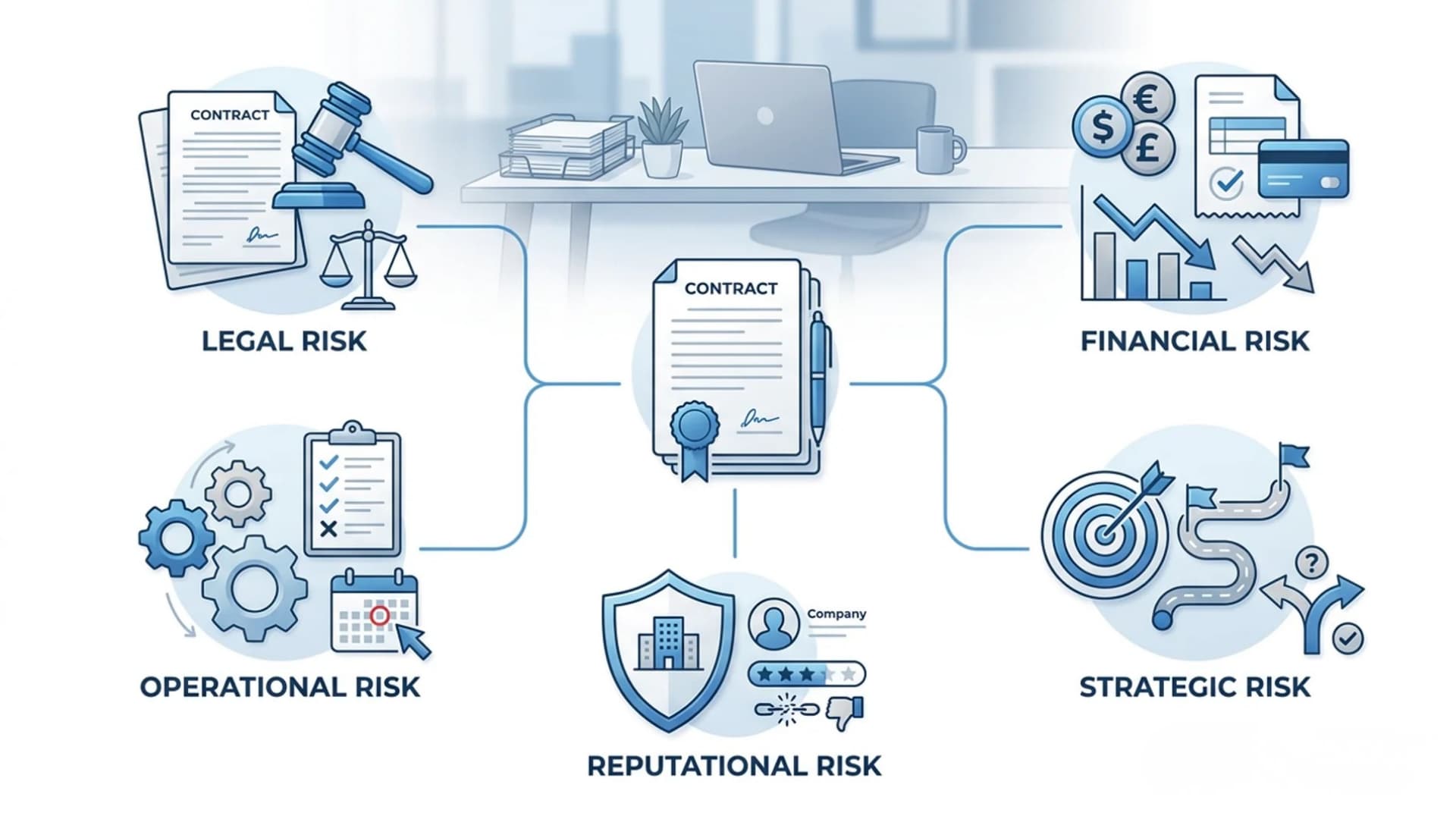
Understanding risk types helps you catch problems before they become costly. Here are the five types every business faces.
1. Legal Risk
Legal risk comes from non-compliance with regulations, vague language, or missing clauses. These gaps can expose your organization to lawsuits, regulatory fines, or contracts that cannot be enforced.
How to catch it: Have legal counsel review contracts before signing. Flag any unclear liability or indemnity terms.
2. Financial Risk
Financial risk includes pricing errors, payment delays, missed auto-renewals, or cost overruns. These issues hit your cash flow directly.
How to catch it: Verify all financial terms. Add clear payment schedules and penalty clauses for late performance.
3. Operational Risk
Operational risk happens when performance fails, deadlines are missed, or deliverables are not clearly defined. This prevents the contract from being fulfilled.
How to catch it: Set measurable performance standards. Include contingency terms for delays or supply disruptions.
4. Strategic Risk
Strategic risk occurs when a contract locks your business into terms that no longer fit your goals. Long exclusivity clauses or one-sided agreements are common examples.
How to catch it: Evaluate partner objectives before committing. Avoid contracts with overly long durations or strict non-compete terms that limit your flexibility.
5. Reputational Risk
Reputational risk comes from confidentiality breaches, vendor misconduct, or public disputes that damage your brand and stakeholder trust.
How to catch it: Run background checks on vendors. Build strong confidentiality and ethics requirements into every agreement.
Common Sources of Contract Risk
Most contract risks trace back to a handful of recurring problems in how agreements are created and managed.
- No version control: Without centralized tracking, teams work from outdated drafts and errors end up in the final agreement.
- Inconsistent drafting: Different teams using different templates create language gaps that lead to compliance issues.
- No clause library: Teams that write from scratch often insert terms that have not been legally reviewed.
- Siloed departments: When legal, finance, and operations don’t communicate, critical contract terms get missed or misaligned.
- Missed renewals: Without a tracking system, contracts auto-renew on outdated terms or key obligations go unmonitored.
Addressing these issues requires both clearer processes and better tools.
The Five Stages of Contract Risk Management
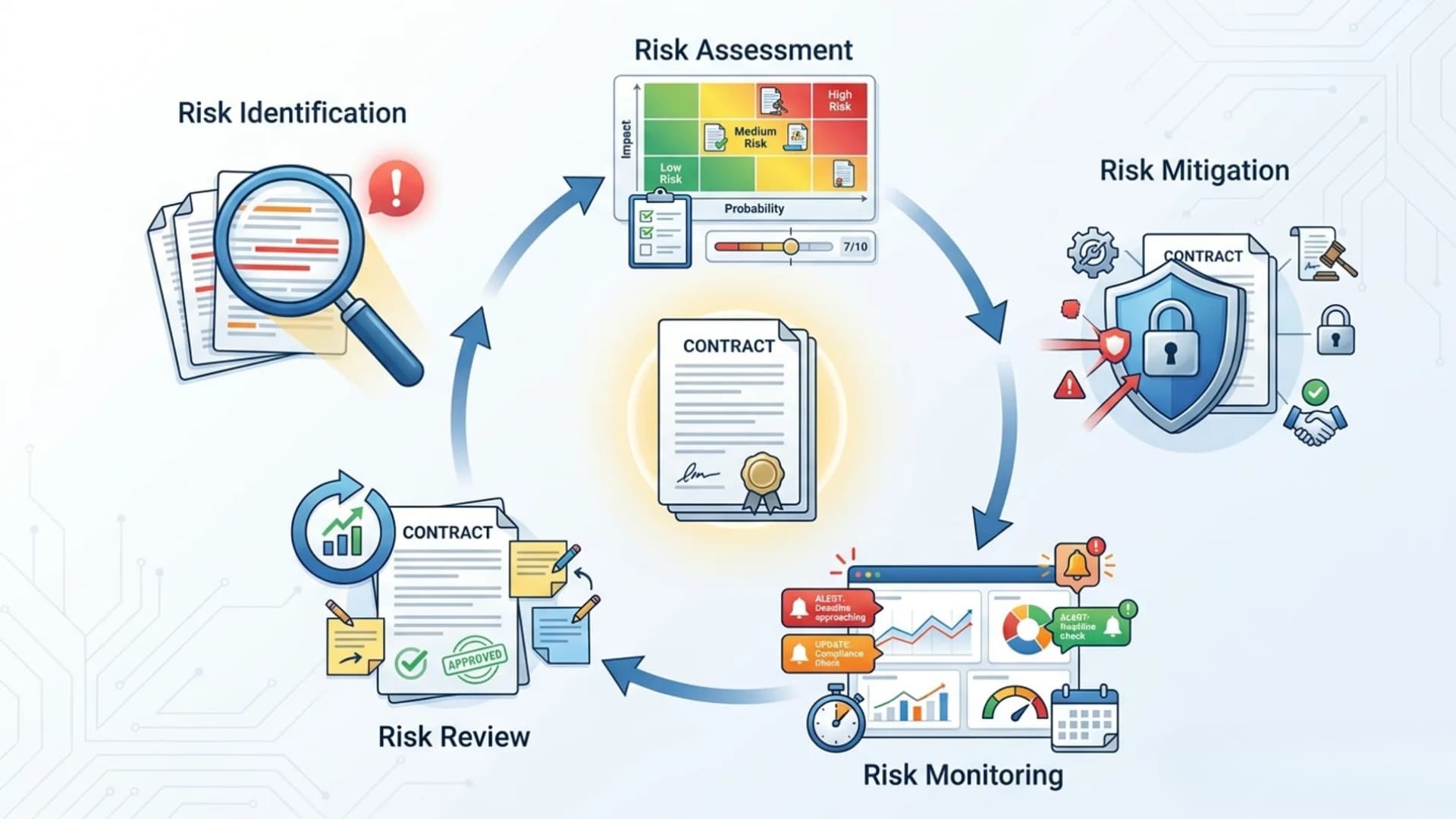
A structured approach keeps risks from slipping through at any point in the process.
Stage 1: Risk Identification
Review every clause for vague language, missing terms, or conditions that could cause disputes. A thorough read-through surfaces hidden vulnerabilities before you sign the contract.
Example: A vendor contract with no defined delivery timeline can lead to costly delays and disputes over who is at fault.
Stage 2: Risk Assessment
Rate each identified risk by likelihood and potential impact. Use a simple scale (low, medium, high) or assign a projected cost. This helps you focus attention on the most serious threats first.
Example: A 10% delay in project delivery might trigger financial penalties and strain the client relationship.
Stage 3: Risk Mitigation
Take concrete steps to reduce or remove the risks you have identified. Negotiate stronger terms, add protective clauses, or require vendor insurance. Clear accountability keeps both parties on track.
Example: A late delivery clause that deducts 5% of payment per week of delay gives the vendor a strong reason to perform on time.
Stage 4: Risk Monitoring
Track contract performance after signing. Set reminders for renewals, check compliance regularly, and watch for early signs of trouble.
Example: Reviewing milestone reports each month catches missed deadlines before they turn into disputes.
Stage 5: Risk Review
After a contract ends, analyze what worked and what went wrong. Update your templates, refine your negotiation approach, and share what you learned across your team.
Example: A post-project review that finds recurring approval delays can cut turnaround time on future contracts.
Tools That Support Contract Risk Management
Manual tracking is slow and error-prone. Technology makes the process more reliable at every stage.
- Contract Lifecycle Management (CLM) Platforms: CLM platforms store all your agreements in one secure location. They automate renewal reminders, track clause changes, and flag compliance issues before they become problems.
- AI-Powered Risk Analysis Tools: AI tools scan contracts for risky language in seconds. They compare terms against company policies and automatically highlight potential vulnerabilities. This is especially useful when you manage a high volume of agreements.
- Cross-Functional Access: Giving legal, finance, and operations teams access to the same contract data reduces miscommunication and speeds up decisions.
Automation does not replace human judgment. It gives you better data so the decisions you make are faster and more informed.
Tips to Improve Your Contract Risk Management Process
These practices build a more consistent and reliable process over time.
- Work across departments. Legal, financial, and operational teams each see different risks. Get them into the same process.
- Store all contracts in one place. A centralized repository prevents lost documents and makes audits much faster.
- Review active contracts quarterly. Check for upcoming renewals, compliance gaps, and missed obligations.
- Use standard templates. Pre-approved clause libraries reduce drafting errors and speed up negotiations.
- Train your team. Anyone who handles contracts should understand basic risk concepts and know what to flag for review.
Managing Contract Risk Starts with a Clear Process
Contract risk management protects your business from legal disputes, financial losses, and failed obligations. When you identify risks early, assess them properly, and build clear terms into every agreement, contracts stop being a liability and start working in your favor.
Ask yourself: Do you know where all your contracts are? Can you spot risks before they cause problems? Are you learning from past agreements?
If the answer is no, it is time to build a better process. The right approach to contract risk management saves money, protects your reputation, and keeps your business relationships strong.