
The fintech space is crowded. And it’s getting more crowded every year. With over 26,000 startups spread across the Americas, EMEA, and Asia Pacific, standing out takes more than a great product. It takes smart marketing.
But here’s the problem: traditional financial marketing doesn’t work for fintech. Consumers expect speed, clarity, and proof. They want to trust you before they hand over their money.
That’s where strong fintech marketing comes in. Today, the average fintech company spends around $1,450 to acquire a single customer. And that number keeps rising.
Getting this right is not optional; it’s survival. This guide walks you through practical strategies that help fintech brands grow, earn trust, and beat the competition. Every tactic here is backed by real data and industry practice.
What is Fintech Marketing?
Fintech marketing is the use of focused strategies to promote financial technology products and services. It covers everything from mobile payment apps and digital wallets to lending platforms and investment tools.
It’s different from traditional financial marketing in a few ways. Banks rely on brand history and in-person trust. Tech companies lean on product features.
Fintech marketing blends both worlds: it must explain complex products simply while also proving the brand is safe and reliable.
The three main goals of fintech marketing are:
- Trust: Users share sensitive financial data. They need confidence in your platform.
- Acquisition: Getting the right users to sign up, download, or subscribe.
- Retention: Keeping users engaged so they don’t switch to a competitor.
Without these three pillars in place, even the best fintech product can struggle to gain traction.
Why Marketing is Critical for Fintech Growth?
Fintech operates in a space where users can switch apps in seconds. Switching costs are low. Loyalty is hard to earn. That means your brand and your message matter more than ever.
Consider this: the average fintech company spends about $1,450 to acquire a single customer. And customer acquisition costs (CAC) have risen 40 to 60 percent since 2023. If your marketing isn’t precise, you burn cash fast.
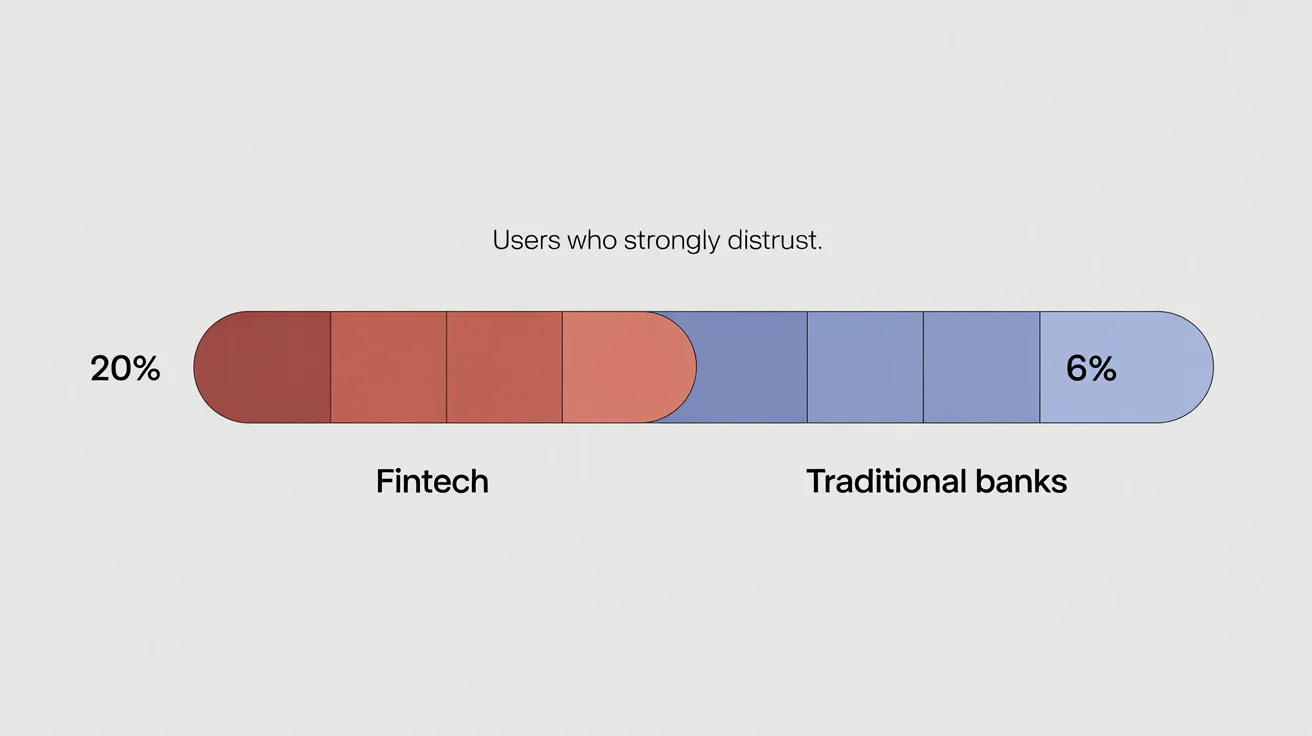
Trust plays a huge role, too. Research shows that 20 percent of users strongly distrust fintech companies, compared to just 6 percent for traditional banks. Fintech brands need to close that gap through clear messaging, proof of security, and consistent education.
Education-driven marketing is especially important here. Many fintech products are new to the average consumer.
If users don’t understand what your product does or why it matters, they won’t adopt it. Strong content that explains financial concepts in plain language builds both authority and loyalty.
7 Core Fintech Marketing Strategies That Work
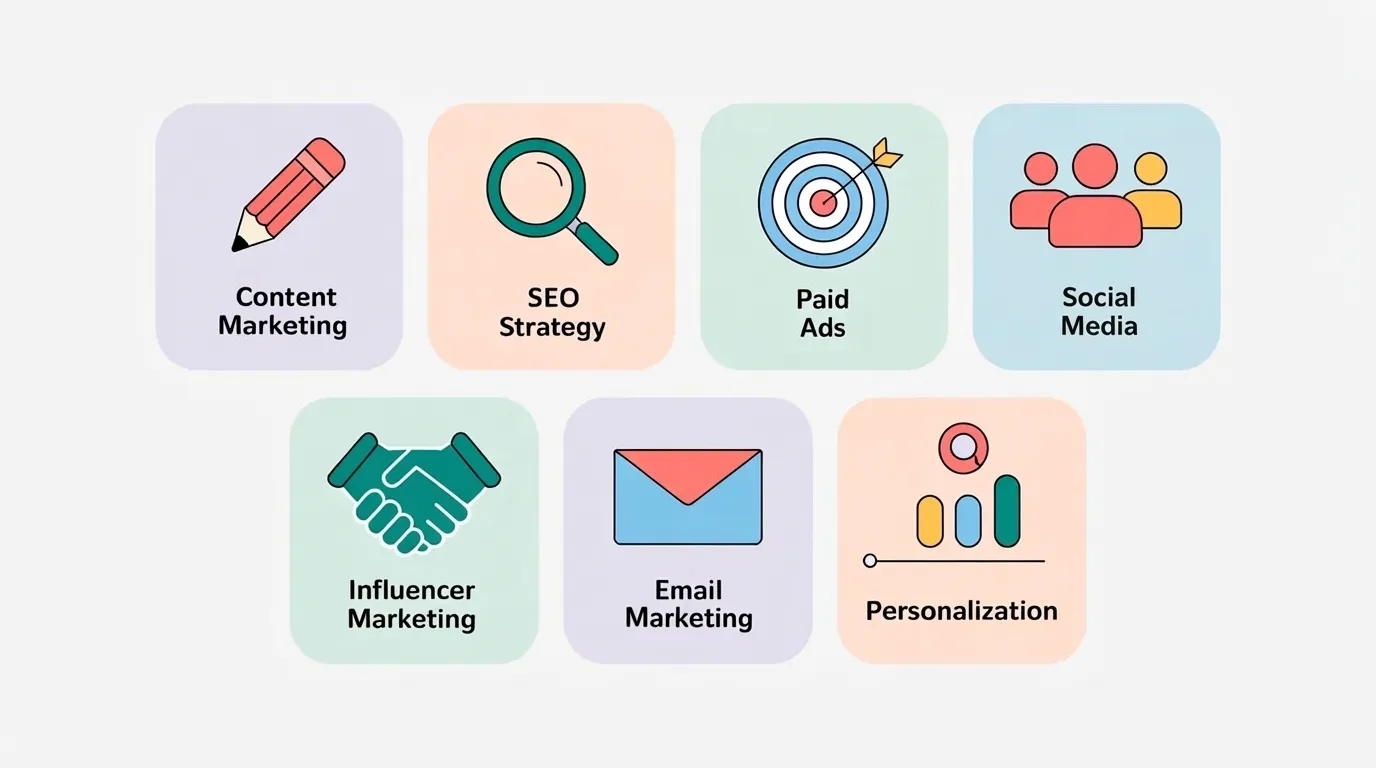
These strategies help fintech brands lower acquisition costs, build trust faster, and keep users engaged over time.
1. Content Marketing for Education and Trust
Content marketing is one of the highest-ROI strategies for fintech brands. Blogs, how-to guides, and explainer articles help users understand your product while positioning your brand as a reliable source.
Focus on:
- Breaking down complex financial topics into simple language.
- Answering questions that your target audience already searches for.
- Publishing regularly to build topical authority in your niche.
NerdWallet is a strong example. Their content covers personal finance, investing, and banking in ways that rank well on search engines and earn reader trust.
2. SEO for Long-Term Organic Growth
A strong SEO strategy brings in high-intent users without ongoing ad spend. For fintech brands, this means targeting keywords that match what users actively search for, such as “best budgeting app or “how to invest with low fees.”
Key SEO priorities include:
- Creating content around high-intent financial keywords.
- Making your site mobile-friendly and fast.
- Building backlinks from trusted financial publications.
Google rewards sites that follow E-E-A-T principles (Experience, Expertise, Authoritativeness, Trustworthiness). In the finance space, this matters more than most industries because Google classifies financial content as “Your Money or Your Life” (YMYL).
3. Performance Marketing and Paid Ads
Paid channels like Google Ads and social media ads offer quick visibility. But in fintech, the cost per lead in financial services ranges from $450 to $760, depending on the channel.
To keep paid marketing profitable:
- Focus on bottom-of-funnel keywords that attract decision-ready users.
- Use comparison guides and ROI calculators as landing page assets.
- Track CAC closely and cut underperforming campaigns early.
4. Social Media and Community Building
More than 4.5 billion people actively use social media. For fintech brands, platforms like LinkedIn and Twitter (X) offer direct access to both retail and business audiences.
What works on social media for fintech:
- Short-form video content that explains financial concepts.
- Behind-the-scenes posts that show the team and the product.
- Financial education posts that help first and sell second.
Community building is one of the most underused strategies in fintech. Brands that create active user communities see organic growth, lower support costs, and stronger loyalty.
5. Influencer and Affiliate Marketing
Micro and nano-influencers in finance and tech communities can bring credibility that traditional ads cannot. When a trusted creator explains your product, audiences listen.
Best practices:
- Partner with creators who genuinely use your product.
- Focus on educational content, not just promotions.
- Track engagement, referral traffic, and conversions, not just impressions.
6. Email Marketing and Lifecycle Campaigns
Email remains a powerful channel for fintech, especially for onboarding, retention, and re-engagement. Personalized emails based on user behavior keep users active and reduce churn.
Effective email strategies include:
- Welcome sequences that teach new users how to use key features.
- Behavior-triggered emails (e.g., a user hasn’t logged in for 7 days).
- Segmented campaigns based on product usage or account type.
7. Personalization and Data-Driven Campaigns
Fintech companies hold valuable user data, including spending patterns, savings behavior, and risk profiles. Used responsibly, this data makes every other strategy more effective.
Behavioral targeting lets you send the right message at the right time. If a user just made their first investment, send tips on portfolio growth. If someone hasn’t logged in for a week, trigger a re-engagement email. Relevance drives action.
Segmentation takes this further. Group users by behavior, such as frequent transactions versus passive savers. Then deliver content that matches each group’s needs. A one-size-fits-all message rarely converts in fintech.
AI and automation are pushing results even further. Machine learning can predict user needs and send timely offers before users even ask. Companies using AI-driven acquisition tools report 22% higher ROI and 29% lower acquisition costs.
One rule applies across all of this: be transparent about data use. Clear privacy policies and strong consent practices are non-negotiable. Users who feel their data is misused will leave and won’t come back.
Data transparency is just one piece of a bigger puzzle. In fintech, trust touches every part of your marketing, from what you say to how you prove it. Here’s how to get it right.
Building Trust and Staying Compliant in Fintech Marketing
Trust and compliance are two sides of the same coin in fintech. You can’t build lasting trust without following the rules. And failing to communicate the rules to users is a missed opportunity.
Users don’t hand over money to brands that feel vague. They look for clear signals that a company is honest, secure, and backed by real results. Here’s how to give them those signals.
Transparent messaging is where trust starts. Spell out your fees. Explain your terms in plain language. Show users exactly how their data is collected, stored, and used. The more upfront you are, the fewer reasons people have to hesitate.
Security is another deal-breaker. Most users won’t dig into your backend to check if their data is safe. So bring your security standards to the surface. Display encryption details, compliance certifications, and data protection practices on your homepage, sign-up pages, and app store listings. If users can’t see it, it doesn’t exist to them.
Social proof carries extra weight in fintech because financial decisions feel personal. A five-star rating or a real case study from someone in a similar situation can tip the balance. Place customer reviews, video testimonials, and success stories where users make decisions: landing pages, pricing pages, and onboarding screens.
Strategic Partnerships say a lot about your brand. Align with recognized banks, payment networks, or certification bodies. When users see familiar, trusted names next to yours, it signals safety before they read a single word of copy.
Staying Compliant Without Killing Creativity
Fintech marketing must work within strict legal boundaries. Every claim in your ads, emails, and landing pages must be accurate and backed up.
This comes at a real cost. Mature fintech companies allocate 8-12% of revenue to compliance. Early-stage firms often spend 15-20%. But cutting corners here leads to fines, lawsuits, and lost reputation.
There are three key areas to watch.
- Advertising guidelines specific to financial services vary by region and product type. Know the rules before you publish.
- Data protection laws like GDPR and CCPA affect how you collect, store, and use customer information in campaigns.
- Balancing creative messaging with legal accuracy is a constant challenge. Bold claims attract clicks, but inaccurate ones attract regulators.
The best approach is to build compliance review into your content workflow from the start. Get legal input on drafts before they go live. It saves time and protects your brand.
Fintech Marketing Channels to Prioritize
Not every channel delivers the same results for fintech. The right mix depends on your product, audience, and growth stage.
Organic Search is the best long-term investment. Users who find you through Search have high intent, cost less to convert, and stay longer. Build keyword-rich content that answers what your audience types into Google.
Paid search and Display Ads offer quick visibility. But with cost per lead ranging from $450 to $760, focus spend on bottom-of-funnel keywords where users are closest to a decision.
LinkedIn and Twitter (X) work best for B2B fintech. LinkedIn reaches decision-makers. Twitter (X) builds real-time credibility. Post 3-5 times per week with educational content and product updates.
App Store Optimization (ASO) matters for mobile-first products. Treat your listing like a landing page: clear title, benefit-driven description, strong visuals, and real reviews.
Partnerships and Referrals lower acquisition costs fast. Cash App’s early referral program reduced CAC to $5- $10 per user through small cash bonuses. A simple referral incentive can turn existing users into your best growth channel.
Short-Form Video is rising fast. TikTok, Instagram Reels, and YouTube Shorts let you explain financial concepts in under 60 seconds. Education-first content performs best. Track which topics drive downloads, then double down on them.
How is Success Measured in the Fintech Market?
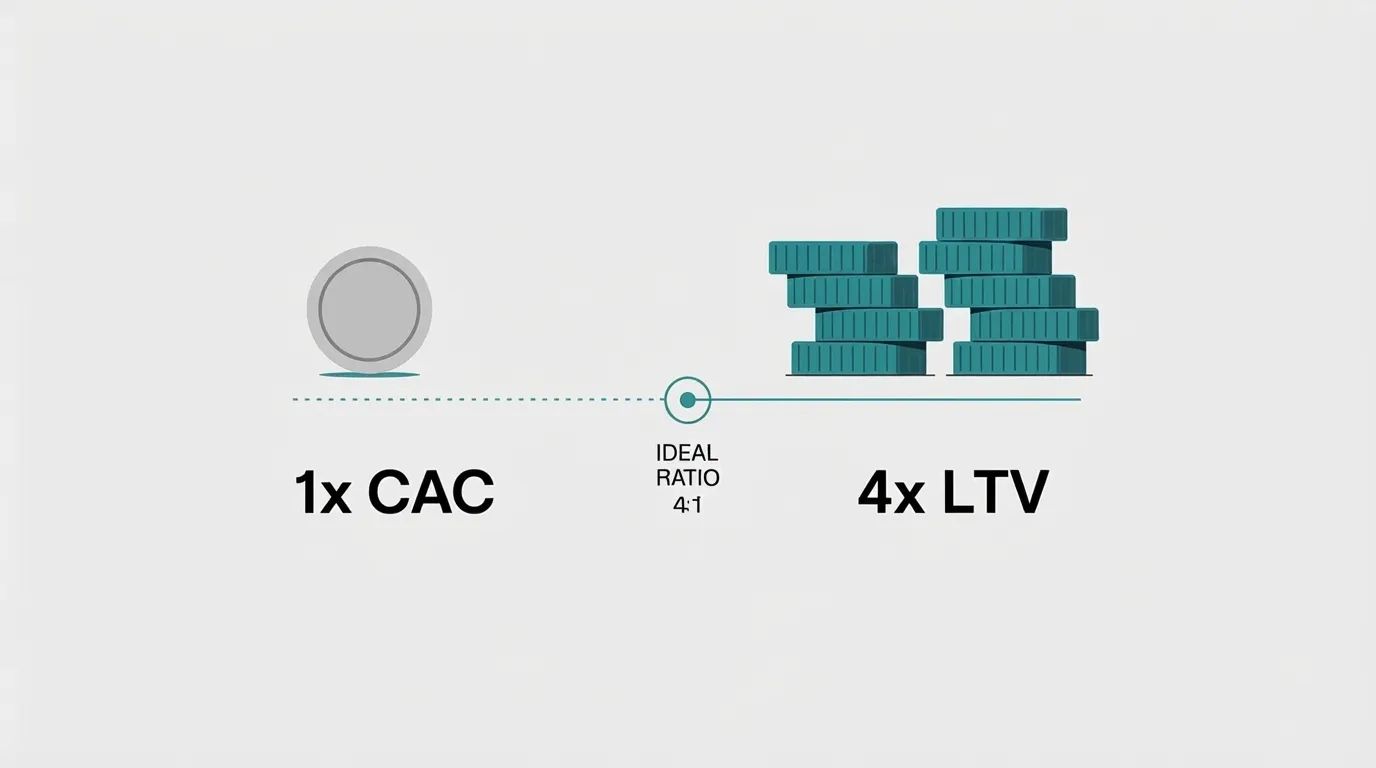
Every fintech marketing team needs a clear set ofnumbers to judge what’s working and what’s wasting money.
1. Customer Acquisition Cost (CAC) is the first number to watch. It shows you how much you spend to acquire one paying user. The fintech average sits around $1,450. If yours is above that, your channel mix likely needs a rethink.
2. Lifetime Value (LTV) shows how much revenue a single customer generates over their full relationship with your brand. The goal is an LTV-to-CAC ratio of at least 4:1. Drop below 3:1 and you’re either spending too much to acquire users or losing them too quickly.
3. Conversion Rates reveal where your funnel breaks. If a page gets strong traffic but few sign-ups, the problem usually sits in your messaging, layout, or offer.
4. Retention and Churn deserve close attention in fintech. Finance apps see some of the highest uninstall rates across all app categories. Track how many users stay active after their first week, month, and quarter. That tells you more than total downloads ever will.
5. Campaign ROI brings the full picture together. Measure what each dollar returns across every channel. Shift budget toward campaigns that drive real, lasting users, not just clicks.
Future Trends in Fintech Marketing
The fintech marketing landscape keeps shifting. Brands that adapt early gain a clear advantage. Here are the trends shaping what comes next.
1. AI-driven personalization
AI is getting smarter every year. Real-time user behavior now fuels targeting that feels relevant, not intrusive. AI tools can group users by spending habits, predict churn risk, and automatically trigger campaigns.
Companies using these tools already report 22 percent higher ROI on marketing spend.
2. Embedded finance marketing
It is growing fast. Financial features such as buy now, pay later, instant loans, and insurance are now built directly into non-financial apps. Marketing these features requires a different approach.
Instead of selling a standalone product, you’re promoting a feature within someone else’s platform. That demands clear co-branding and simple, benefit-first messaging.
3. Privacy-first strategies
It will shape the next wave of marketing. Third-party cookies are fading. First-party data and consent-based marketing are taking their place.
Fintech brands that build strong data ecosystems now, through email lists, app usage data, and loyalty programs, will spend less on acquisition later.
Conclusion
Fintech marketing is not about spending more. It’s about spending smarter. The brands that grow are the ones that earn trust, educate their users, and track every dollar.
Start with a clear strategy. Use content and SEO to build long-term visibility. Layer in paid ads and social media for short-term results. And always put the user first.
Remember: 20 percent of users distrust fintech brands. That gap closes only when your messaging is clear, your security is visible, and your social proof is strong. Every channel you use should reinforce that trust.
The tactics in this guide are proven. They lower costs, bring in the right users, and keep them around. In a market where customers leave fast, consistency wins.
Frequently Asked Questions
Will AI Replace Fintech?
No. AI is a tool fintech companies use, not a replacement. It improves fraud detection, personalization, and automation. Fintech still needs human oversight for compliance and trust.
What are the Top 5 Fintech Companies?
Stripe, Visa, Mastercard, Revolut, and PayPal consistently rank among the top fintech companies globally, spanning payments, digital banking, and financial infrastructure.
What Skills are Needed in Fintech?
Key skills include data analysis, digital marketing, financial regulation knowledge, UX design, and programming. Strong communication and problem-solving abilities also matter across all fintech roles.