Getting a real estate license takes most candidates 3 to 6 months. Online courses can cut that to 8 to 10 weeks if you move quickly through each step. The final timeline depends on your state’s education requirements, how fast you study, and how long the application takes to process.
This post walks through every step, compares Illinois and Indiana requirements, and shows you the fastest ways to finish.
How Long Does It Take to Get a Real Estate License?
It takes 3 to 6 months to get a real estate license in a traditional classroom setting. Online pre-licensing courses can cut that time to 8 to 12 weeks for candidates who study consistently. The five steps below determine your total timeline.
| Step | Typical Time |
|---|---|
| Pre-licensing education | 6–12 weeks |
| Application submission | 1–2 weeks |
| Exam preparation and testing | 2–4 weeks |
| Background check and fingerprinting | 1–3 weeks |
| Post-licensing requirements | 2–4 weeks |
Step 1: Complete Pre-Licensing Education (6–12 Weeks)
Every state requires a set number of classroom or online hours before you can sit the exam. The range is wide. Florida requires 63 hours, while California requires 135 hours. Illinois and Indiana each require 90 hours.
Online courses let you work at your own pace. A focused candidate can finish a 90-hour course in three to four weeks. In-person classes run on fixed schedules and typically take six to twelve weeks to complete.
Course topics cover real estate law, contracts, property ownership, financing, fair housing, and agency relationships.
Step 2: Submit Your Application (1–2 Weeks)
After finishing your course, you submit an application to your state licensing board. The application requires:
- A completed application form
- Proof of course completion
- A background check authorization
- A fingerprinting appointment confirmation
Processing usually takes one to two weeks after all documents arrive. Missing a single item, such as a signature, a certificate, or a date, delays the whole process. Review every document before you submit.
Step 3: Prepare for and Pass the Real Estate Exam (2–4 Weeks)
The licensing exam covers both national real estate principles and state-specific law. Plan two to four weeks of focused study after your coursework ends. Practice tests and focused state law review can significantly improve pass rates. Coursework notes alone are not enough.
Exam scheduling depends on available testing center slots. Booking early gives you more date options, especially during spring and summer when demand increases.
If you fail, most states let you retake the exam without a mandatory waiting period. You pay another exam fee and schedule a new appointment.
Step 4: Complete the Background Check and Fingerprinting (1–3 Weeks)
Nearly every state requires electronic fingerprinting and a criminal background check before issuing a license. This step runs in parallel with your application in some states and after you pass the exam in others.
Processing takes one to three weeks. Applicants with straightforward records move through faster. Records with discrepancies, name changes, or prior legal issues take longer because they require additional documentation.
Submit clear documentation for any name changes or past legal matters upfront. Waiting until asked adds days or weeks to your timeline.
Step 5: Post-Licensing Requirements (2–4 Weeks)
Some states add post-licensing requirements after your license is issued. These vary by state and may include:
- Continuing education credits
- Broker affiliation or sponsorship
- State-specific training modules on ethics, local law, and disclosures
In Illinois, newly licensed brokers must complete 45 hours of post-licensing education within their first two-year renewal period. In Indiana, you must complete 30 hours of post-licensing education within the first two years. Budget two to four weeks for this step, depending on how quickly you complete the courses.
Illinois vs. Indiana: Real Estate License Requirements Compared
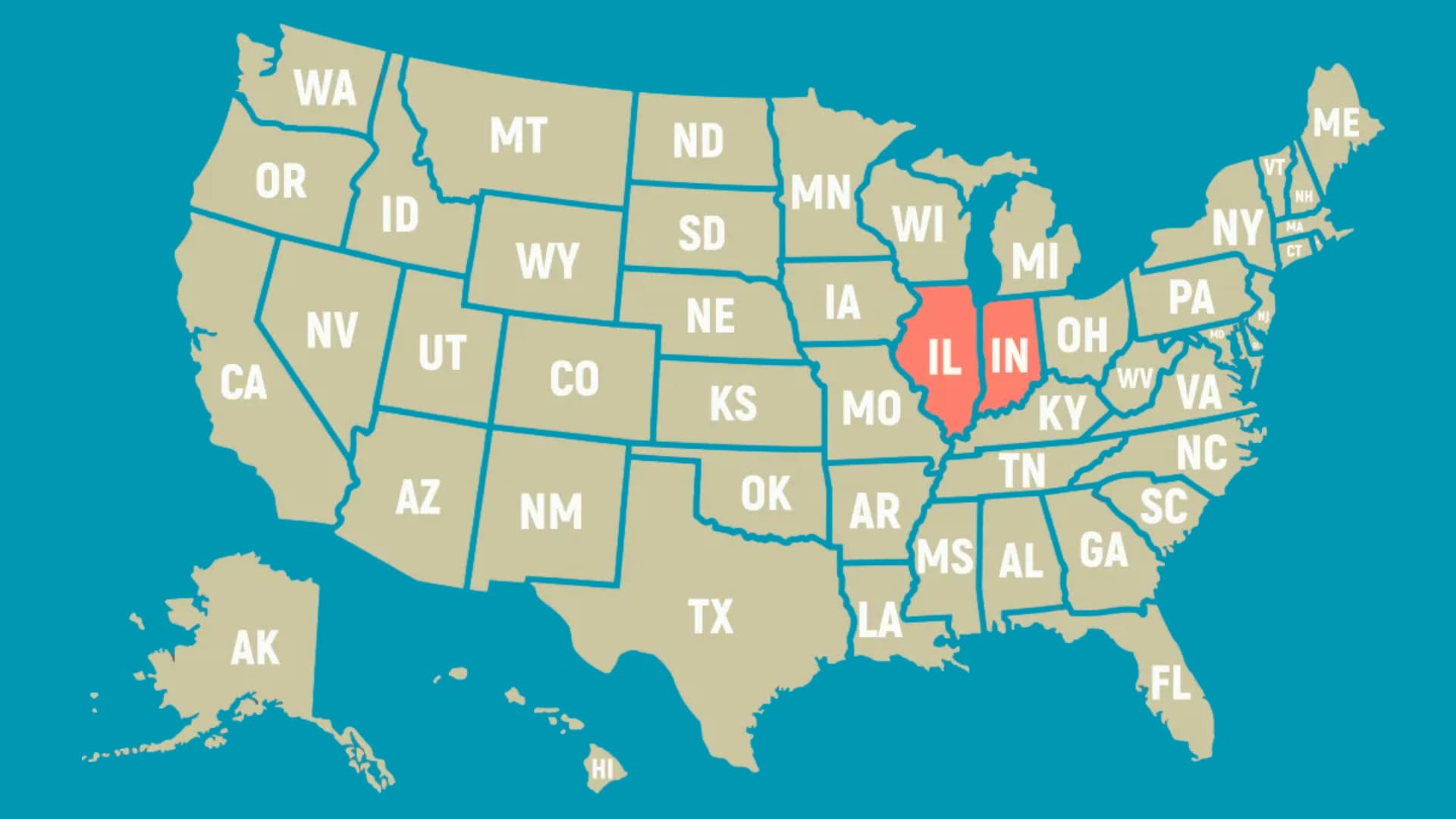
Both Illinois and Indiana typically take 3 to 6 months to complete from start to finish. The differences lie in education structure and exam format.
| Requirement | Illinois | Indiana |
|---|---|---|
| Pre-licensing hours | 90 hours (75 academic + 15 interactive) | 90 hours (three 30-hour modules) |
| Course delivery | Online and in-person | Online and in-person |
| Exam format | 140 questions (100 national, 40 state) | 125 questions (80 national, 45 state) |
| Exam pass rate | ~67% overall | ~64% overall (state section ~51%) |
| Application fee | $150 (updated January 2024) | Varies by exam provider |
| Background check processing | 1–2 weeks | 1–2 weeks |
| Realistic minimum timeline | 10 weeks (fast-track online) | 3–4 months typical |
| Sponsoring broker required | Yes. License stays inactive without one. | Yes |
One key difference: Indiana’s state exam section has a lower pass rate than the national section. Candidates in Indiana should spend extra time on Indiana-specific law before test day.
In Illinois, the entry-level credential is called a Broker license. There is no separate salesperson category. Your license remains inactive until a Managing Broker agrees to sponsor you.
As of July 2024, Indiana requires a written buyer agency agreement before a broker can represent a buyer. The agreement must include a definite expiration date, and the buyer receives a copy within three business days. This is required under Indiana House Enrolled Act 1068-2024.
How to Get Your Real Estate License Faster
You can cut the overall timeline by two to four weeks with the right approach. These steps have the biggest impact:
- Choose an online pre-licensing course. Online programs let you study at your own pace. A focused candidate can finish a 90-hour course in three to four weeks instead of six to twelve.
- Start exam prep during your coursework. Use practice tests while you study. You spend less time preparing after the course ends.
- Submit your application the day you finish your course. Every day you wait adds to your total timeline.
- Book your exam date early. Testing center slots fill quickly during spring and summer. Schedule before you finish studying.
- Line up a sponsoring broker before you pass the exam. Your license cannot activate until a broker sponsors you. Starting that search early means you can begin work within days of receiving your license.
- Prepare your background check documents in advance. If you have name changes or prior legal matters, gather the paperwork now. Having documents ready removes the most common delay in this step.
How Much Does It Cost to Get a Real Estate License?
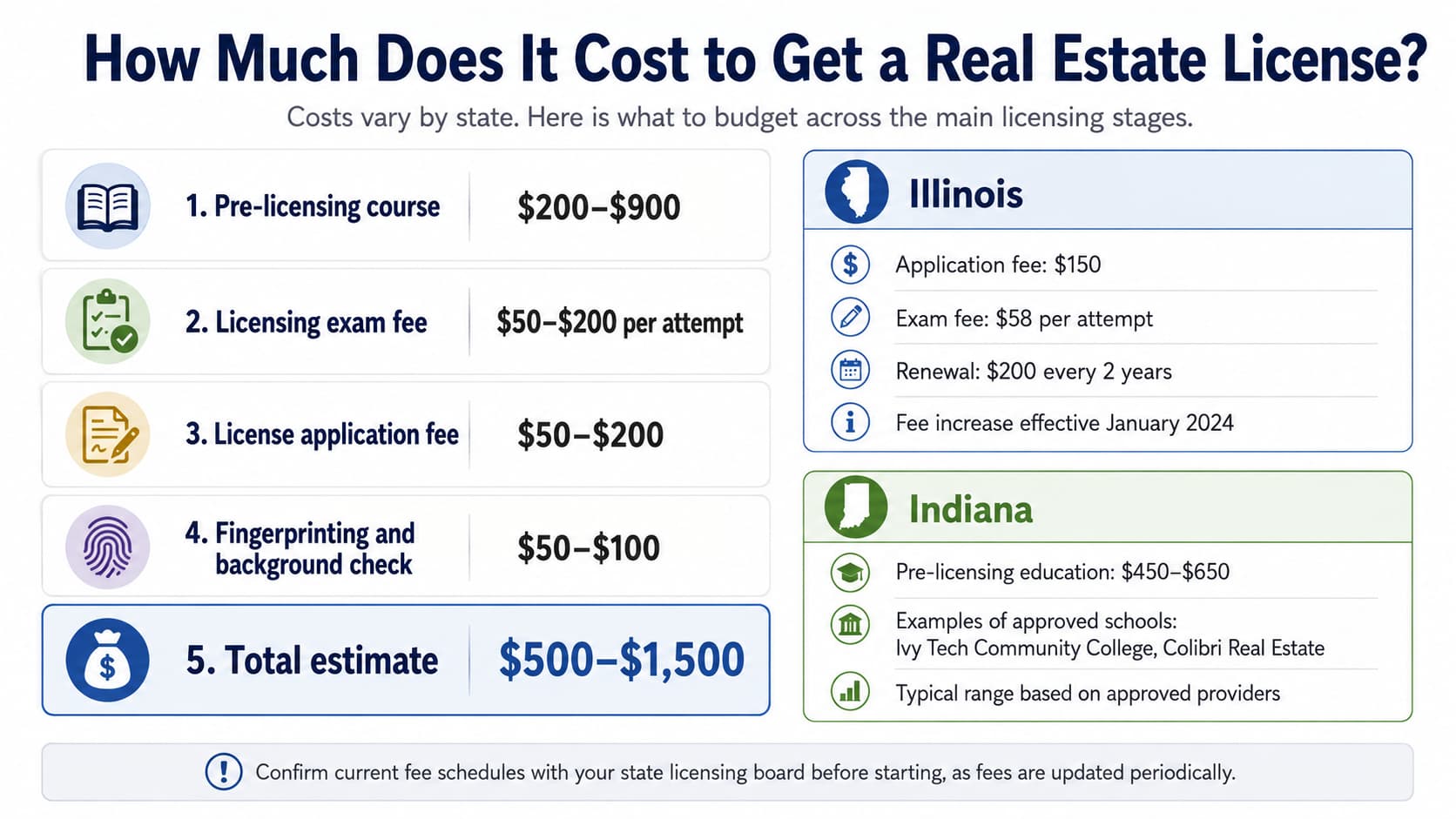
Costs vary by state. Here is what to budget across the main licensing stages:
| Expense | Typical Cost Range |
|---|---|
| Pre-licensing course | $200–$900 |
| Licensing exam fee | $50–$200 per attempt |
| License application fee | $50–$200 |
| Fingerprinting and background check | $50–$100 |
| Total estimate | $500–$1,500 |
In Illinois, the application fee increased to $150 in January 2024. The exam fee is $58 per attempt. Illinois license renewal costs $200 every two years.
In Indiana, pre-licensing education from approved schools such as Ivy Tech Community College or Colibri Real Estate typically runs $450 to $650. Confirm current fee schedules with your state licensing board before starting, as fees are updated periodically.
Mistakes That Slow Down the Licensing Process
These four errors account for the majority of avoidable delays.
1. Submitting Incomplete Paperwork
Missing signatures, incorrect personal information, and incomplete forms are the most common reasons applications get returned. Check every field before you submit: Social Security number, address history, employment history, and course completion dates.
2. Failing the Licensing Exam
A failed exam adds two to four weeks to your timeline. You pay another exam fee and wait for an open testing slot. Thorough prep with state-specific practice tests significantly reduces this risk. Rest well the night before your exam.
3. Background Check Delays
Discrepancies in your name, missing court documents, or unresolved legal matters can extend processing by weeks. Submit supporting documents upfront. Do not wait until the check flags an issue.
4. Waiting to Find a Sponsoring Broker
This step catches many new licensees off guard. A license issued without an active sponsoring broker sits inactive. Start researching brokerages before you take the exam. Finding the right fit can take one to four weeks.
Key Takeaways
Getting a real estate license takes 3 to 6 months through a traditional path. Online coursework and early preparation can reduce that to 8 to 12 weeks. Illinois and Indiana both require 90 pre-licensing hours and follow a similar timeline. Indiana’s state exam section is notably harder than Illinois’s.
The candidates who finish fastest apply early and book their exam before completing the course. They also line up a sponsoring broker before they pass.
Start your pre-licensing course today, and you can be working in real estate before the end of the year.
Frequently Asked Questions
Can you get a real estate license in less than a month?
In a few states with lower hour requirements, it is technically possible, but rare. Florida requires 63 hours, which you can complete in one to two weeks full-time. For most states, 8 to 10 weeks is a realistic fast-track minimum.
How much does it cost to get a real estate license in Illinois?
Total costs range from $558 to $1,208. This includes pre-licensing education ($300–$900), the state exam fee ($58 per attempt), the application fee ($150), and fingerprinting ($50–$75).
Do I need a college degree to get a real estate license?
No. A high school diploma or GED satisfies the education prerequisite in most states. A college degree is not required for entry-level licensure in Illinois or Indiana.
What happens if I fail the real estate exam?
You can retake it. In Illinois and Indiana, there is no mandatory waiting period. You schedule a new appointment, pay the exam fee again, and retake only the section you failed.
Does a real estate license from Illinois work in Indiana?
Not automatically. Both states now use an endorsement process rather than direct reciprocity. As of January 1, 2026, out-of-state applicants in Illinois must apply through the Endorsement Process via IDFPR. Indiana has a similar process through the IPLA. Check each state’s licensing board for current requirements before applying.